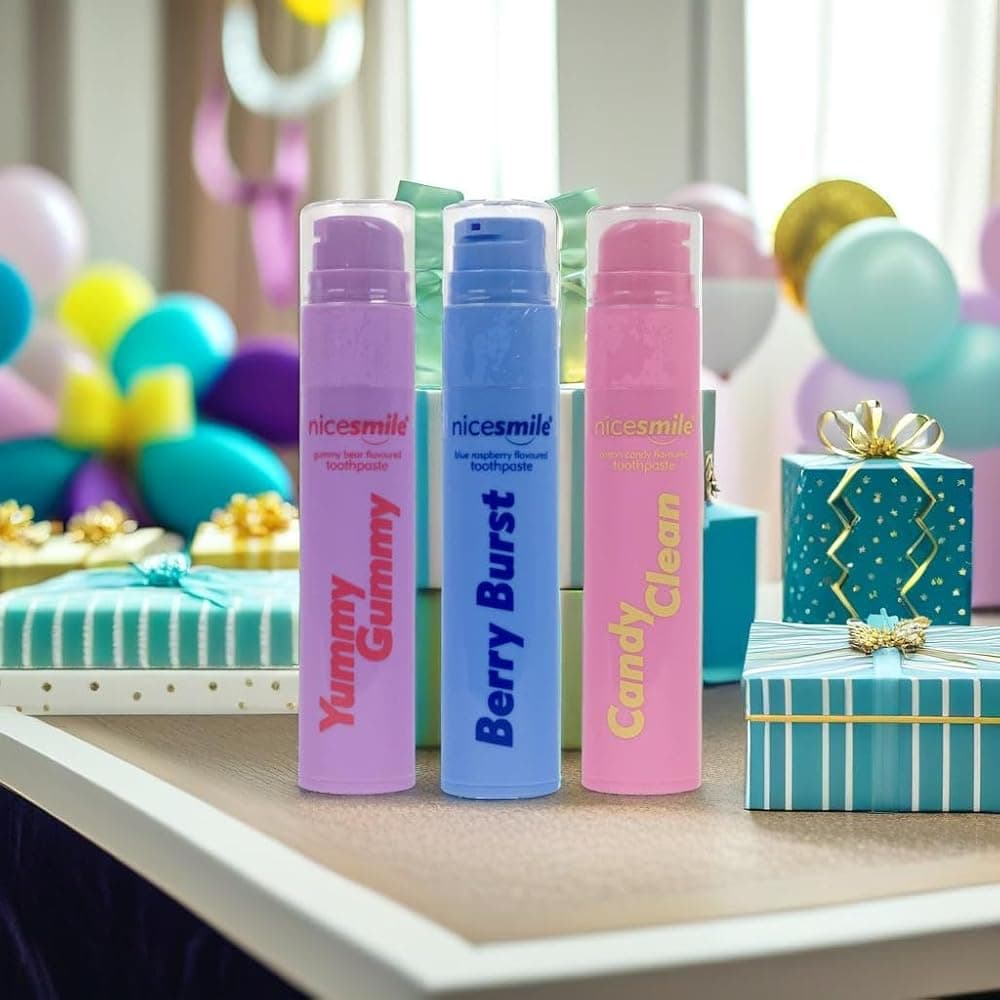
How much toothpaste should a child use? According to NHS guidance, children under 3 should use a thin smear of fluoride toothpaste, and children aged 3 to 6 should use a pea-sized amount. From around 7, a pea-sized amount of a family-strength toothpaste is still plenty. That's far less than the full stripe along the brush you see in adverts.
Getting the amount right matters in both directions. Too little and your child misses out on fluoride's protection; too much and a young child swallows more fluoride than they need. This guide covers the amounts for each age, what they look like in real life, and how to find the fluoride level on the pack.
How much toothpaste should a child use? The quick answer
Here's the NHS guidance at a glance, alongside who should be doing the brushing at each stage.
| Age | How much toothpaste | Fluoride level to look for | Who brushes |
|---|---|---|---|
| Under 3 | A thin smear | No less than 1,000ppm | An adult |
| 3 to 6 | A pea-sized amount | More than 1,000ppm | Your child has a go, you help and finish |
| 7 and over | A pea-sized amount | 1,350 to 1,500ppm (family toothpaste) | Your child, with checks from you |
| Adults | A pea-sized amount | 1,350 to 1,500ppm | You |
The NHS advises helping or supervising your child's brushing until they're at least 7. That's partly about technique and partly about the toothpaste: an adult in charge of the tube means the amount stays right.
What does a smear or a pea-sized amount look like?
The words sound clear enough until you're standing at the sink with a wriggling toddler. Here's what they mean in practice.
A smear (under 3)
A smear is a thin film of toothpaste scraped across the bristles, rather than a blob sitting on top. It's often compared to the size of a grain of rice. It looks like hardly anything, and that's the point: babies and toddlers can't spit well yet, so much of it ends up swallowed.
A pea-sized amount (3 and over)
Picture a garden pea. Squeeze a dot of about that size onto the middle of the brush head and press it down into the bristles slightly so it doesn't slide off on the way to their mouth. It should sit in one spot, not run along the whole brush.
What about the full stripe?
A long ribbon of toothpaste along the whole brush looks generous, but it isn't needed by anyone in the family. For children it means more fluoride swallowed, more foam and more chance of them wanting to spit and stop early.
Why the right amount matters
Too little toothpaste
Brushing with a dry brush, or with barely a trace of paste after the smear stage, means less fluoride in contact with the teeth. Fluoride helps strengthen enamel and protect against decay, so skimping on it undoes part of the good work.
Too much toothpaste
Young children tend to swallow some of what goes on the brush. Regularly swallowing too much fluoride while the adult teeth are still forming can cause dental fluorosis, which usually shows up as faint white lines or flecks on the teeth. That's why the amounts for young children are small, and why the NHS advises discouraging children from eating or licking toothpaste from the tube.
Fluoride strength and amount work together
The amount only makes sense alongside the fluoride level. A pea-sized amount of a stronger toothpaste delivers more fluoride than the same amount of a weaker one, which is why the NHS guidance gives both. For a fuller explanation of what fluoride does, read our guide to fluoride toothpaste.
How to find the fluoride level on the pack
In the UK, the fluoride content is usually printed on the tube or box as a ppm (parts per million) figure, often next to the name of the fluoride ingredient, such as sodium fluoride. Look for wording like "ppm F" or "fluoride ppm" near the ingredients list.
- Found it? Compare it with the table above for your child's age.
- Can't find it? Ask your pharmacist or dentist before using it for a young child.
- Using a family toothpaste? A toothpaste with 1,350 to 1,500ppm meets the NHS guidance for young children too, as long as you use the right amount for their age.
All Nice Smile toothpastes contain fluoride. We don't publish the exact ppm figure on our site, so please check the pack to make sure it suits the age of the person using it.
Brushing habits that make a small amount go further
The right amount of toothpaste works best alongside good brushing habits:
- Brush twice a day for about two minutes, last thing at night and at one other time.
- Spit, don't rinse. Rinsing with water washes away the fluoride that keeps protecting teeth after brushing.
- Save mouthwash for another time. The NHS suggests not using mouthwash straight after brushing, for the same reason.
- Cover every surface. Outsides, insides and chewing surfaces, top and bottom, with extra care at the back.
Choosing a toothpaste your child will use
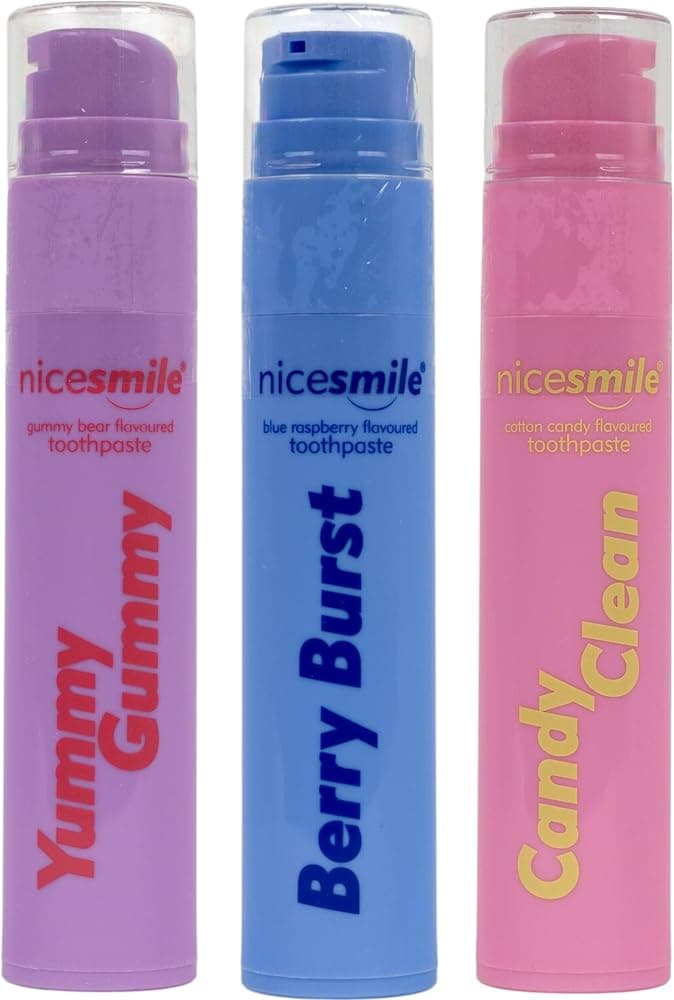
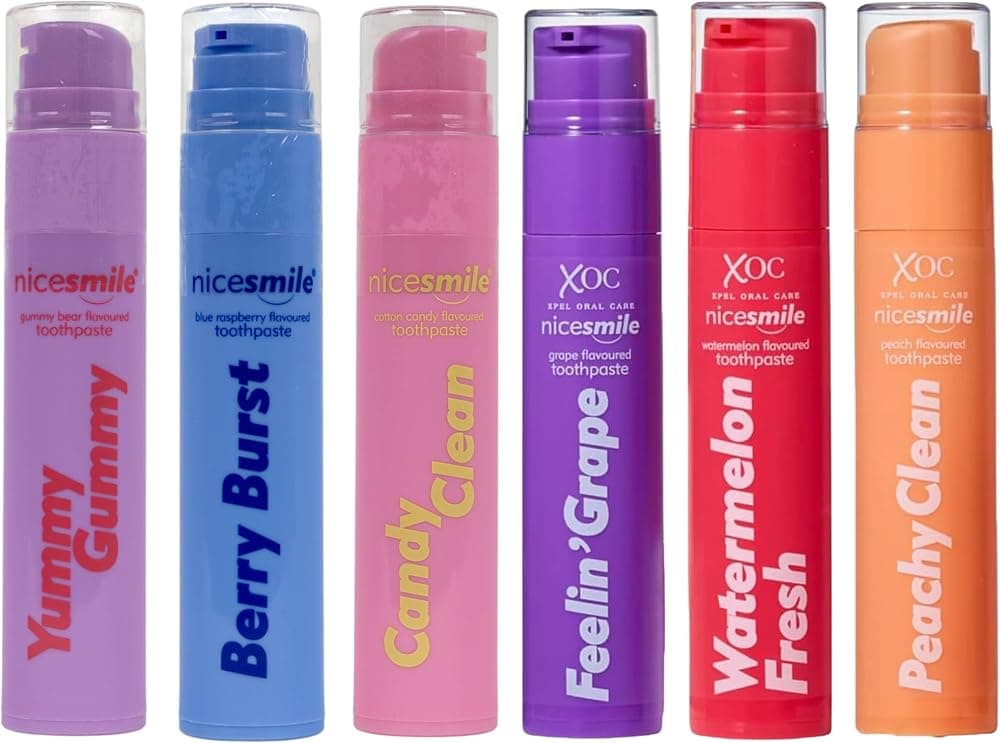
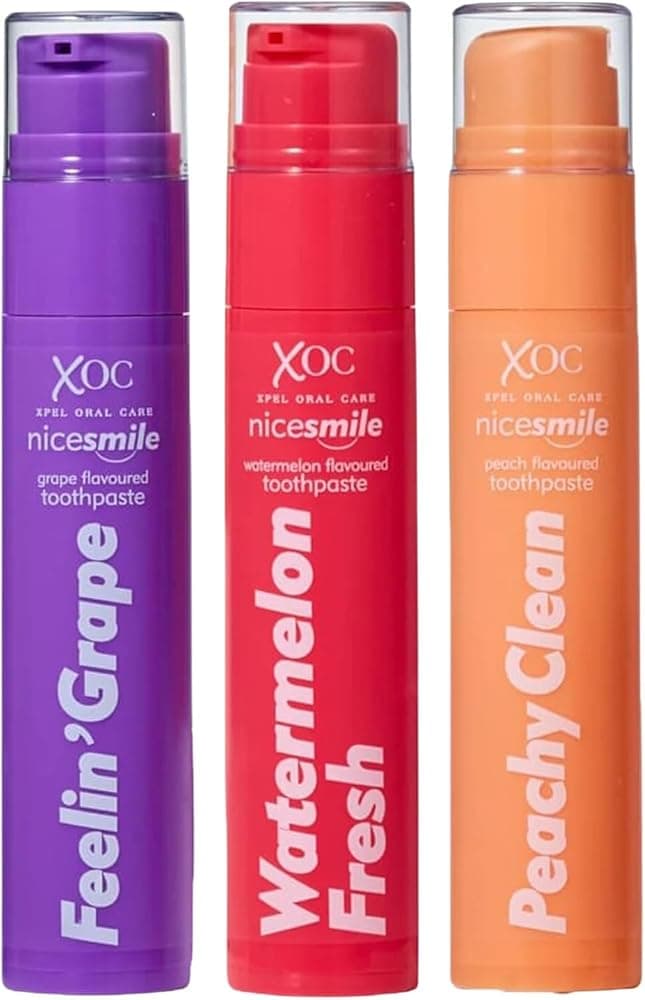
The best amount in the world doesn't help if your child refuses to brush. A flavour they enjoy makes the whole routine easier, which is why some parents choose a milder flavour than strong mint for younger children. Our guide to toothpaste for kids who hate mint covers the options.
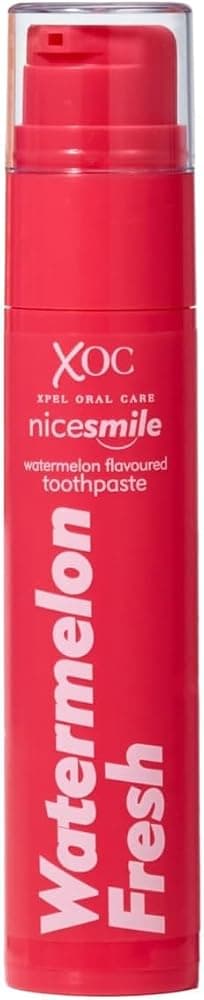
If you want to test a flavour before buying a bundle, a single tube is the low-risk way to do it. The Nice Smile Watermelon Fresh Toothpaste is a 60g whitening fluoride toothpaste that the listing describes as leaving your mouth clean and refreshed "without harsh mint". When we checked in September 2026 it was £7.95 on Amazon. You're one in a melon.
Once you've found a favourite, bundles bring the cost per tube down. You can compare every flavour and pack size in our toothpaste collection.
What if my child swallows toothpaste?
Swallowing a little toothpaste while brushing is normal for young children, especially before they learn to spit. That's exactly why the recommended amounts are so small. It's not something to panic about.
Eating toothpaste from the tube is different. If your child has swallowed a large amount, or you're worried for any reason, call NHS 111 or speak to a pharmacist for advice.
The bottom line
The answer to how much toothpaste a child should use is refreshingly small: a smear for under-3s and a pea-sized amount from 3 onwards, with the fluoride level on the pack matched to their age. Squeeze it yourself, encourage them to spit rather than rinse, and keep brushing twice a day. At PoundMart, we'd add one more tip: pick a flavour they like, so the right amount goes in without a fuss.
Frequently asked questions
Should toddlers use fluoride toothpaste?
Yes. The NHS recommends brushing as soon as the first milk tooth appears, using a smear of toothpaste containing no less than 1,000ppm fluoride. Brush for them, twice a day, including last thing at night.
Can my 4-year-old use adult toothpaste?
Yes, if you use a pea-sized amount. The NHS guidance for children aged 3 to 6 is toothpaste with more than 1,000ppm fluoride, and a standard family toothpaste (1,350 to 1,500ppm) meets that. Some children find adult mint flavours too strong, in which case a milder flavour can help.
When can a child use a full strip of toothpaste?
A full strip isn't needed at any age. A pea-sized amount is plenty for older children and adults, and using more simply means more foam and more waste. Brushing thoroughly for two minutes does far more than piling on extra paste.
Should children rinse their mouth after brushing?
No. The NHS advises spitting out the toothpaste but not rinsing, because rinsing washes away the fluoride. If your child dislikes the aftertaste, try a flavour they enjoy.
How do I get my child to spit out toothpaste?
Show them how by spitting yourself, and make it a game, such as aiming for the plughole. Most young children learn to spit gradually, which is why the smear for under-3s is so small. Keep practising and supervise until they've got the hang of it.