
So, what does fluoride do for teeth? In short, it makes enamel stronger and better at resisting the acid attacks that cause tooth decay, it helps repair the very earliest stages of decay before a cavity forms, and it makes life harder for the plaque bacteria that produce that acid in the first place. That's why the NHS recommends brushing twice a day with a fluoride toothpaste, and why fluoride is the key active ingredient in most toothpastes on UK shelves.
Below, we explain how fluoride works in plain English, how much you need at each age according to NHS guidance, and the small habits that help it do its job properly. If you're buying for the whole household, we'll also cover what to check on the tube before it goes in the basket.
What does fluoride do for teeth, exactly?
Fluoride is a naturally occurring mineral. It turns up in water supplies at varying levels, in some foods and, most usefully, in toothpaste. When you brush with a fluoride toothpaste, a little of it stays behind in your saliva and on the surfaces of your teeth. From there it gets to work on three jobs.
1. It strengthens enamel
Enamel, the hard outer layer of your teeth, is mostly made of minerals. Each time you eat or drink something sugary, the bacteria in plaque turn that sugar into acid, and the acid draws minerals out of the enamel. This is called demineralisation. Fluoride helps enamel take minerals back in, and the rebuilt surface is more resistant to the next acid attack.
2. It helps repair early decay
Tooth decay doesn't appear overnight. It starts as tiny areas where enamel has lost minerals, sometimes visible as chalky white spots. At that early stage the damage can be stopped and even reversed. Fluoride supports this repair process (remineralisation), which can stop weak spots from becoming cavities that need filling.
3. It makes plaque less harmful
Fluoride also interferes with the way plaque bacteria use sugar, so they produce less acid. Less acid means fewer, weaker attacks on your enamel.
Put those three together and you have the reason fluoride toothpaste sits at the centre of NHS advice on preventing tooth decay.
The daily tug of war on your teeth
It helps to picture your teeth in a constant tug of war. On one side, sugar and acid pull minerals out. On the other, saliva and fluoride put them back. Teeth stay healthy when the "putting back" side wins more often than it loses.
That's why how often you have sugar matters as much as how much you have. Every sugary snack or drink starts a fresh acid attack. Grazing all day gives your enamel very little time to recover, while keeping sweet foods and drinks to mealtimes gives saliva and fluoride a proper chance to repair things in between.
It's also why brushing last thing at night is so valuable. Saliva flow drops while you sleep, so a fresh layer of fluoride before bed protects your teeth during the hours when your mouth's natural defences are at their lowest.
How much fluoride do you need? NHS guidance by age
Fluoride in toothpaste is measured in parts per million, written as ppm. You'll usually find the figure in the ingredients list or printed on the tube or box. Here's what the NHS recommends:
| Who | NHS recommendation |
|---|---|
| Children under 3 | Brush with a smear of toothpaste containing no less than 1,000ppm fluoride |
| Children aged 3 to 6 | Use a pea-sized amount of toothpaste containing more than 1,000ppm fluoride |
| Adults | Use a toothpaste containing 1,350 to 1,500ppm fluoride |
| Everyone | Brush twice a day for about two minutes, last thing at night and at one other time |
As children get older, ask your dentist when they can move onto a family-strength toothpaste. If you're unsure how much paste to put on a little one's brush, our guide to how much toothpaste kids should use walks through it step by step.
One honest note: fluoride strength varies between brands and sometimes between products from the same brand. We don't publish a ppm figure for Nice Smile on this site, so please check the pack before you buy, especially for a young child, and match it to the guidance above.
Spit, don't rinse: getting the most from fluoride
Fluoride works best when it has time to sit on your teeth. A few simple habits make a real difference:
- Brush for about two minutes, twice a day. Last thing at night is the most important session.
- Spit out the excess, but don't rinse with water. Rinsing washes away the concentrated fluoride left behind.
- Don't use mouthwash straight after brushing. If you like mouthwash, the NHS suggests using it at a different time of day, such as after lunch.
- Keep sugary food and drinks to mealtimes. Fewer acid attacks means less repair work.
- Replace your toothbrush every three months, or sooner if the bristles splay. Here's how to tell when your toothbrush needs replacing.
- See your dentist regularly. They'll tell you how often based on your own teeth and gums.
Is fluoride safe?
Used as the NHS recommends, fluoride toothpaste is considered safe and effective for children and adults. The main thing to watch is young children swallowing toothpaste. Too much fluoride while adult teeth are still forming under the gums can cause dental fluorosis, which usually shows up as faint white flecks or lines on the teeth.
That's the reason the NHS gives specific amounts for young children, and why it's sensible to:
- supervise children's brushing until they're around 7 or 8 years old
- use a smear or a pea-sized amount, not a full strip, for younger children
- teach children to spit out the foam rather than swallow it
- keep tubes out of reach so little ones can't help themselves
Some parts of England have fluoride added to the water supply. Your water company can tell you whether that applies where you live, but either way the NHS still recommends brushing with fluoride toothpaste.
If your dentist thinks you're at higher risk of decay, they may prescribe a higher-strength fluoride toothpaste or apply fluoride varnish to your teeth. These are tailored to the individual, so never use someone else's prescription toothpaste. If you have any worries about fluoride, your dentist or pharmacist is the right person to ask.
Choosing a fluoride toothpaste the whole family will actually use
The best toothpaste is the one that gets used twice a day, every day, without a battle. When you're choosing, check:
- Fluoride level. Make sure the ppm on the pack suits each person's age.
- Flavour. Plenty of children, and a fair few adults, find strong mint too harsh. A flavour they enjoy makes two minutes much easier.
- Extras. Whitening, enamel care or a vegan formula might matter to your household.
- Value. If everyone is brushing properly, you'll get through tubes steadily, so a multipack can make sense.
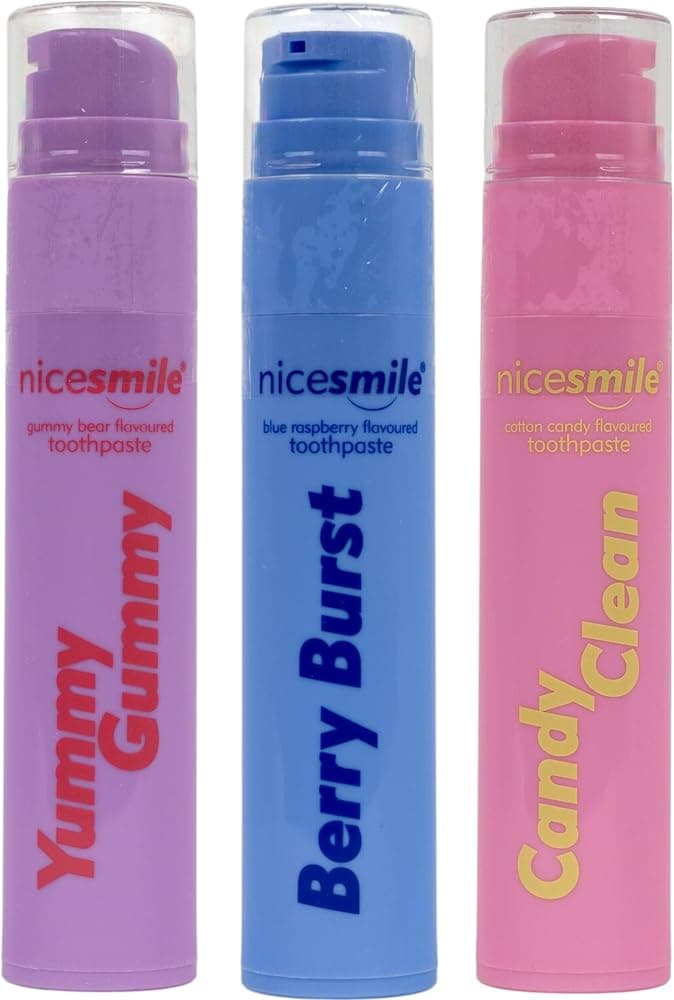
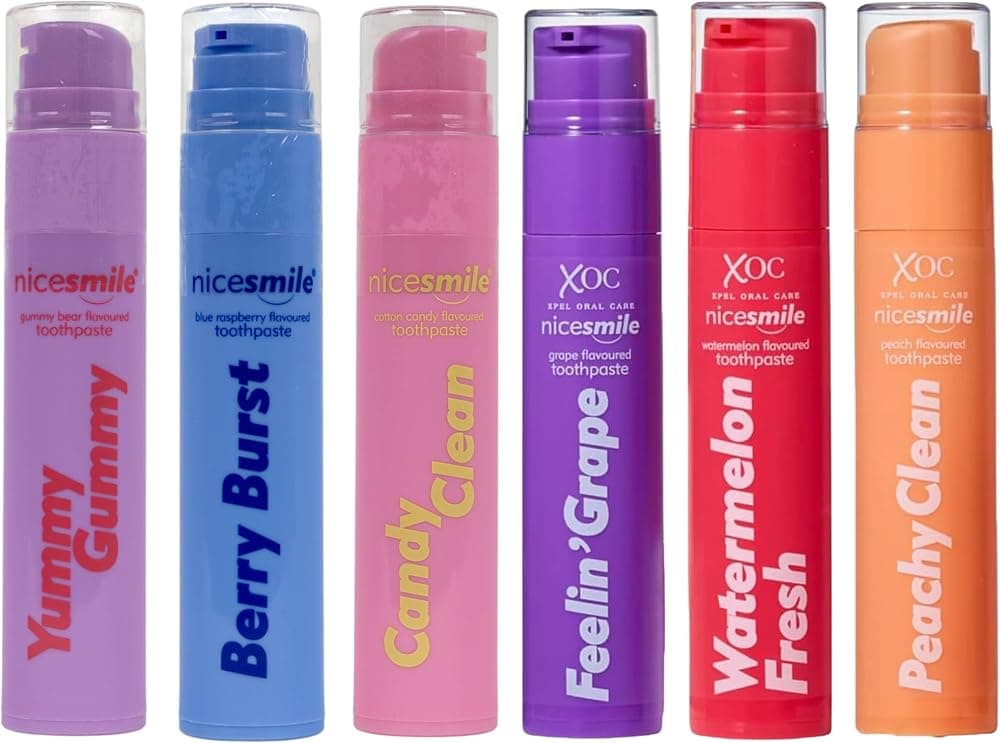
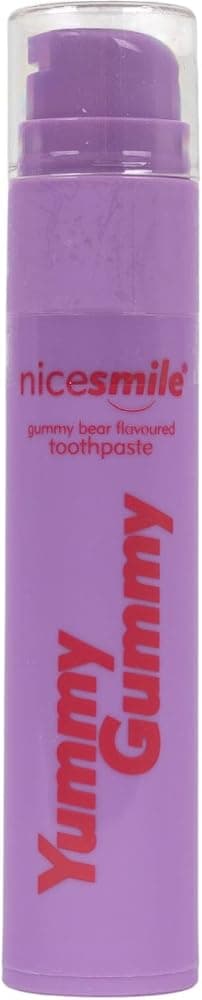
At PoundMart, we bundle flavoured Nice Smile toothpaste so households can stock up on flavours everyone likes.
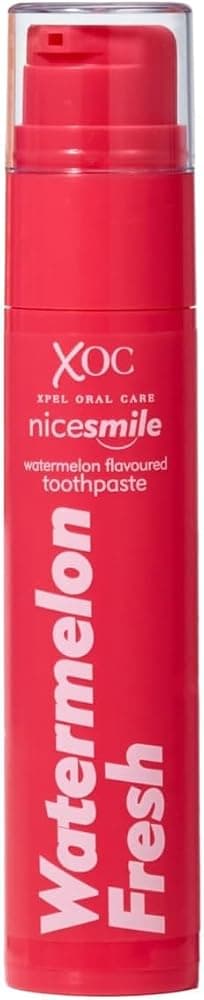
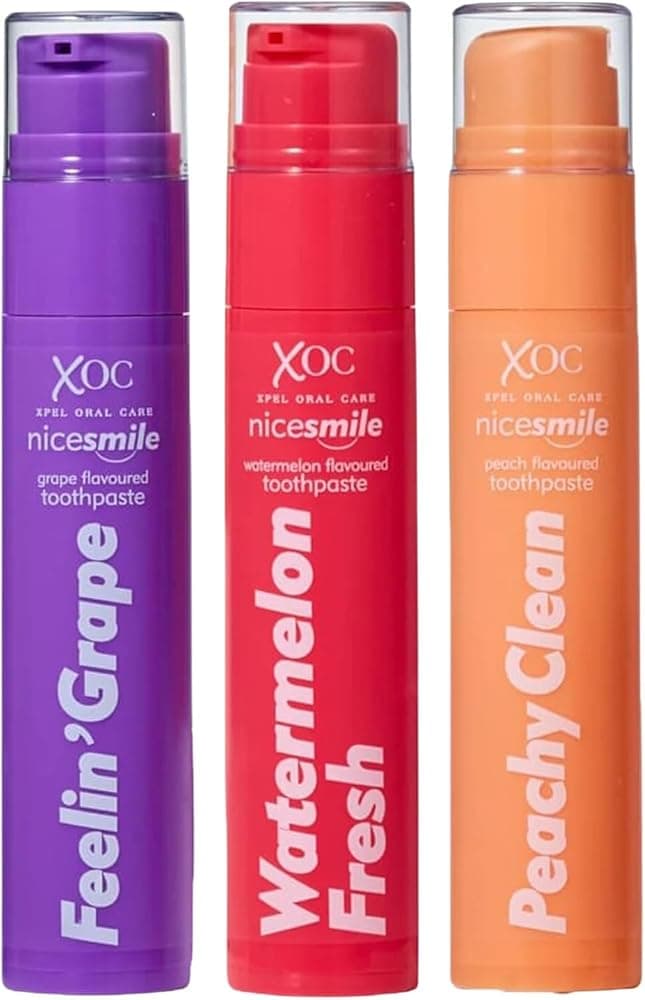
The Nice Smile 3 Pack in Watermelon Fresh, Feelin' Grape and Peachy Clean contains three 60g tubes. The listing describes it as a whitening fluoride toothpaste that helps prevent cavities and strengthen enamel, and it's vegan, cruelty-free and enamel-safe. When we checked in September 2026, it was £12.99 on Amazon, about £4.33 a tube. Brush with grape-ness. You can compare it with the rest of the range in our toothpaste collection.
Common fluoride myths, cleared up
"Fluoride-free toothpaste works just as well." A fluoride-free paste can clean your teeth, but it doesn't give you fluoride's protection against decay. That's why NHS advice centres on fluoride toothpaste.
"More toothpaste means more protection." Not for young children. Sticking to a smear or a pea-sized amount is part of using fluoride safely.
"A good rinse is more hygienic." Rinsing after brushing actually reduces the fluoride left on your teeth. Spit, don't rinse.
"Whitening toothpaste doesn't have fluoride." Many whitening toothpastes do contain fluoride, including Nice Smile. Whitening pastes remove surface stains rather than changing your natural tooth colour, as we explain in does whitening toothpaste work.
The bottom line
Fluoride strengthens enamel, helps repair early decay and reduces the acid that plaque produces. To get the benefit, brush twice a day for about two minutes with a toothpaste that has the right fluoride level for your age, spit rather than rinse, and keep sugary snacks to mealtimes. Pair that with regular dental check-ups and you've covered the basics that matter most.
Frequently asked questions
Does fluoride really prevent cavities?
Fluoride helps prevent cavities by strengthening enamel, supporting the repair of early decay and reducing the acid that plaque bacteria produce. It works best alongside brushing twice a day, cutting down on sugary snacks and seeing a dentist regularly. That's why the NHS recommends fluoride toothpaste for both children and adults.
What happens if a child swallows fluoride toothpaste?
Swallowing a little toothpaste while brushing isn't usually a cause for concern. The NHS sets small amounts for young children because regularly swallowing too much while adult teeth are forming can cause dental fluorosis (white flecks on the teeth). If a child eats a large amount from the tube, call NHS 111 or speak to a pharmacist for advice.
Should I rinse my mouth after brushing with fluoride toothpaste?
No. Spit out the excess toothpaste but don't rinse with water, as rinsing washes away the concentrated fluoride left on your teeth. If you use mouthwash, choose a different time of day rather than straight after brushing.
Do I still need fluoride toothpaste if my water is fluoridated?
Yes. Fluoridated water and fluoride toothpaste work together, and the NHS recommends brushing twice a day with fluoride toothpaste wherever you live. Your water company can tell you whether fluoride is added to your local supply.
How do I find the fluoride level of a toothpaste?
Look for a figure in ppm (parts per million) in the ingredients or elsewhere on the tube or box. Match it to the NHS guidance for each person's age: no less than 1,000ppm for under-3s, more than 1,000ppm for children aged 3 to 6, and 1,350 to 1,500ppm for adults.