If you're working out how to pick a toothpaste flavour for kids, the short version is this: let flavour decide which tube actually gets used, but let the label decide whether it's any good. A toothpaste that sits unused in the cabinet because a child hates the taste does nothing for their teeth, no matter how well it's formulated. A toothpaste with the right fluoride content, used twice a day because the child actually likes it, does a great deal.
That's the trade-off at the centre of this decision. Flavour gets the toothbrush into a reluctant mouth. The label underneath tells you whether the rest of the job is being done properly. Most parents juggling bedtime brushing battles, a toddler who gags at mint, and more than one child with more than one opinion don't need a lecture on dental chemistry. They need a quick, reliable way to tell a decent toothpaste from a gimmick.
How to pick a toothpaste flavour for kids that still gets teeth clean
Start with what the toothpaste is actually for, then let flavour break the tie between options that are otherwise equal.
Fluoride is the non-negotiable bit. NHS guidance sets out clear amounts by age: children under 3 should use a smear of toothpaste containing no less than 1,000ppm fluoride, children aged 3 to 6 should use a pea-sized amount with more than 1,000ppm, and adults should use a toothpaste with 1,350 to 1,500ppm. Fluoride content varies by product and isn't always printed in the same place, so check the tube itself rather than assuming. What does fluoride do for teeth? is a useful plain-English primer if you want the reasoning behind the numbers.
Once fluoride is sorted, flavour becomes the deciding factor between toothpastes that are otherwise similar. A child who refuses mint isn't being difficult for the sake of it. Mint is sharp and adult-tasting, and plenty of children find it genuinely unpleasant. Fruity or sweet-tasting options exist precisely to solve that problem. Mint-free toothpaste for kids who can't stand mint goes into this in more detail if mint refusal is the specific battle you're fighting.
The label checks that matter before flavour
Before you let a child pick based on the picture on the box, run through a short checklist:
- Fluoride level for their age. Check the pack against the NHS amounts above rather than guessing.
- How much to use. More toothpaste isn't better, and swallowing large amounts regularly isn't ideal. How much toothpaste should a child use? sets this out by age.
- Enamel-safe wording. This generally means the abrasives used won't wear away tooth enamel with normal use. Enamel safe toothpaste explained covers what the term does and doesn't promise.
- Whitening claims. Whitening toothpaste lifts surface stains from things like squash or berries. It doesn't change the natural colour of a tooth, so treat bold whitening claims with a pinch of scepticism. Does whitening toothpaste work? explains the limits.
- Vegan and cruelty-free status. Not essential for dental health, but useful to know if it matters to your household.
None of this takes long once you know what you're looking for, and it stops flavour from becoming the only thing you check.
Why flavour still earns its place
Once the fluoride and the enamel-safe basics are sorted, flavour genuinely does matter, particularly at bedtime. The last brush of the day is the one the NHS is most insistent on, and it's also the one most likely to turn into a negotiation when a tired toddler decides they'd rather not. A flavour they actually like removes one source of friction from a routine that already has enough of them.
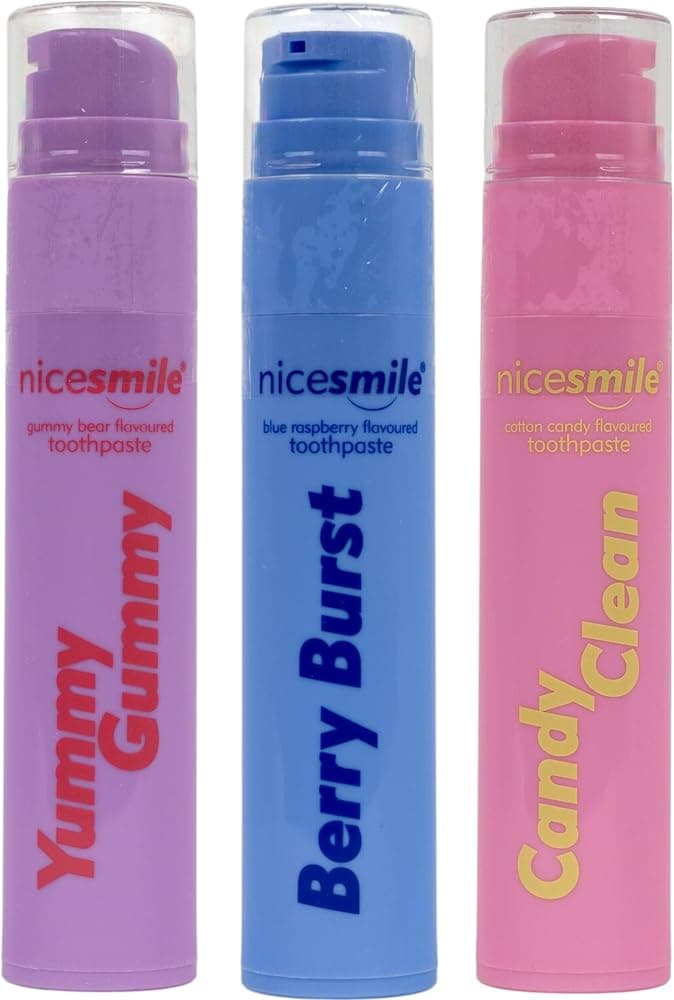
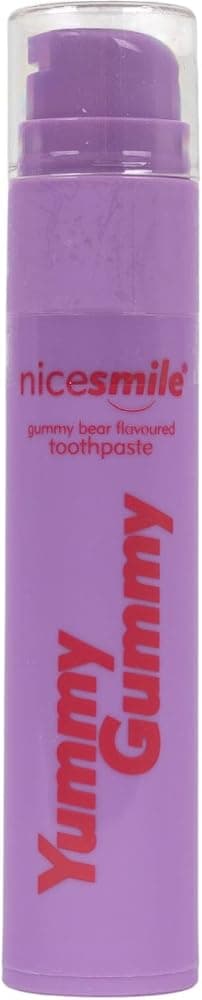
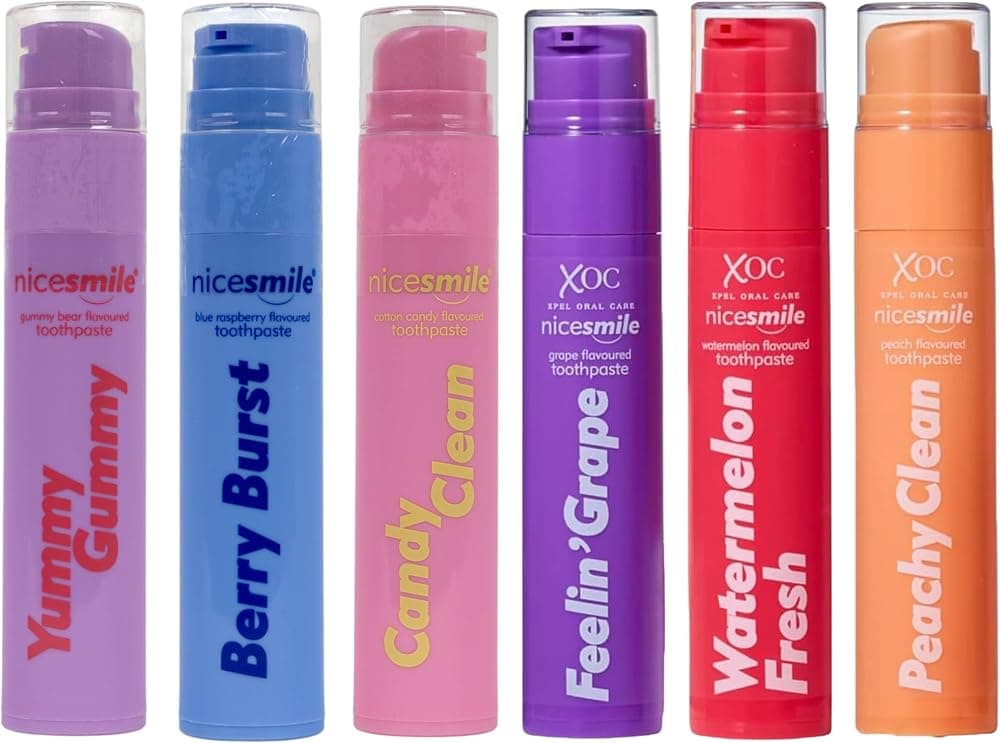
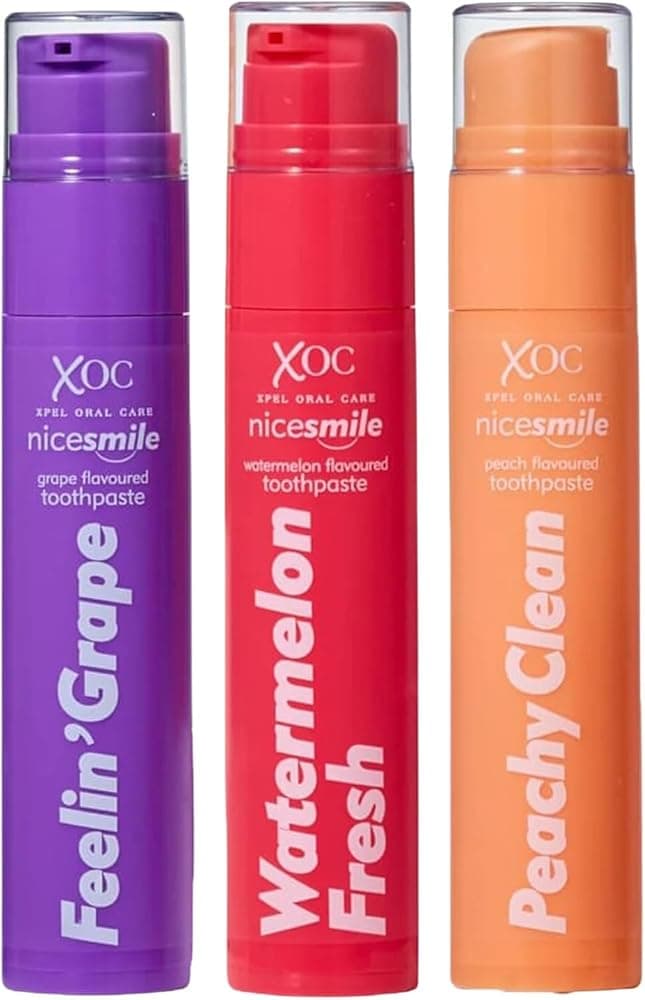
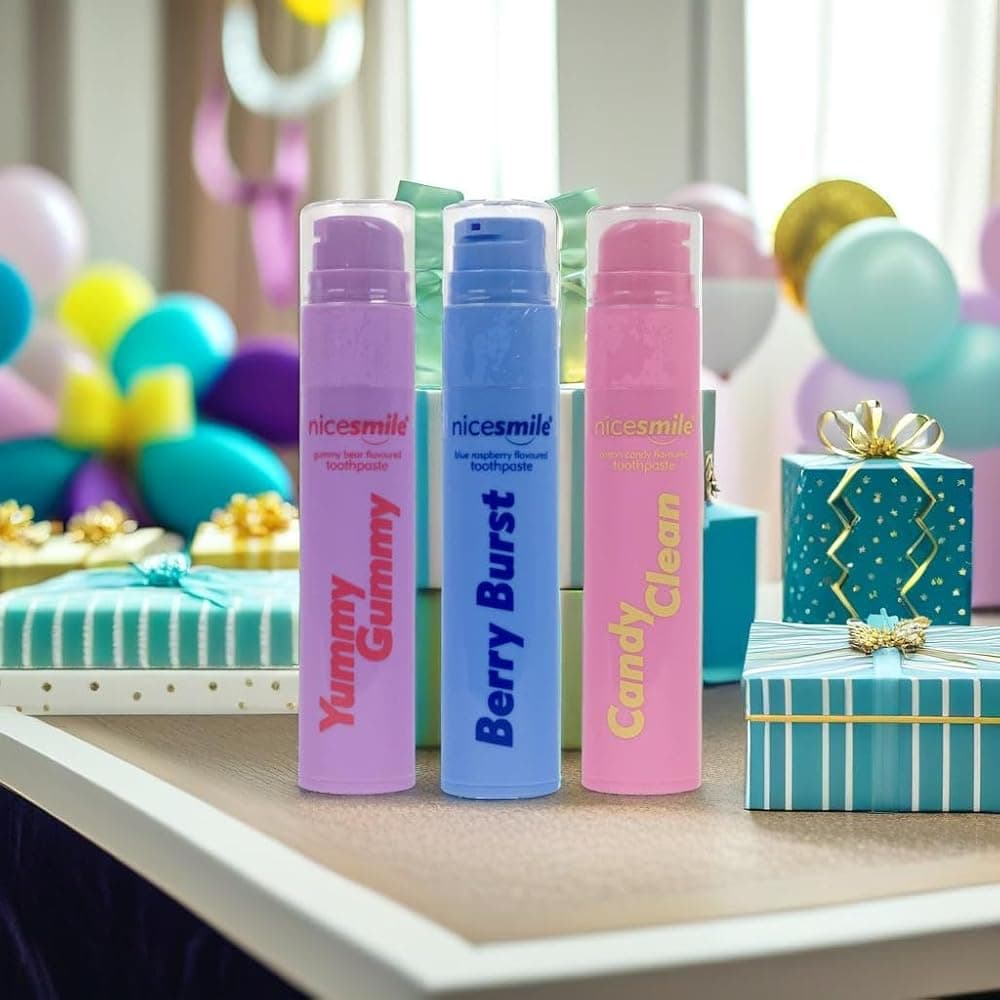
Nice Smile toothpaste comes in six flavours built around this problem: Watermelon Fresh, Feelin' Grape, Peachy Clean, Berry Burst, Yummy Gummy and Candy Clean. None of them taste of mint, which solves the most common complaint straight away, and having six options means you can rotate flavours if a child gets bored of the same one every night, or settle on a favourite if that works better for your family. The toothpaste collection has all six flavours in one place if you want to compare them.
It's worth saying that flavour should support the routine, not replace it. A good flavour gets the brush in the mouth; the two-minute timer, the twice-a-day habit, and spitting rather than rinsing afterwards are what actually do the work. How to build a family brushing routine that sticks is a good next read if the flavour problem is solved but the routine still isn't.
Buying for more than one child without the cost creeping up
Once you've found flavours that work, the next decision is how much to buy and how often. Toddlers go through toothpaste quickly if they're still learning how much to use, school-age children often develop strong opinions about which flavour is 'theirs', and families with more than one child under the same roof can end up needing several tubes on the go at once.
This is where buying in a bundle rather than one tube at a time tends to make more sense. Bigger multi-packs generally cost less per tube than buying singly, so it's worth checking the live price on Amazon before deciding how many to buy. If your household has settled preferences, the Nice Smile 6 Pack Toothpaste Bundle is available either as all six flavours together or as a Berry, Gummy and Candy set, which suits a child who's already told you exactly what they like. For a bigger household, or simply to stop running out mid-term, the Nice Smile 12 Pack Toothpaste Bundle covers Watermelon Fresh, Feelin' Grape and Peachy Clean across twelve tubes, which is handy if you're stocking up for school mornings and packing for a family holiday in the same shop.
Buying ahead also helps with the logistics of school mornings and travel. A spare tube in a packed bag means nobody discovers at 7.40am that the only toothpaste left is the one nobody likes. Travel toiletries checklist is worth a look before any trip, since airline liquid rules vary by airport and it's worth checking your departure airport's current limits before you pack.
Common mistakes worth avoiding
A few small missteps come up again and again when parents are choosing between flavours:
- Assuming 'flavoured' always means 'mint-free'. Check the ingredients list rather than the front of the pack.
- Letting a child use adult amounts. More toothpaste doesn't clean better and isn't recommended at younger ages.
- Switching flavour every time there's a complaint. A short settling-in period is normal; constant switching can make it harder to build a routine.
- Forgetting the toothbrush itself. A toothbrush with splayed bristles doesn't clean well regardless of the toothpaste. How often should you replace your toothbrush? gives the simple rule.
If a child has ongoing problems with brushing, sensitive teeth, or you're unsure about anything specific to their mouth, a dentist or pharmacist is the right person to ask rather than guessing. For general questions about an order or a bundle, you can always get in touch directly.
Frequently asked questions
What's the best toothpaste flavour for a toddler who hates mint?
There's no single best flavour for every child, but fruity or sweet options such as watermelon, grape or peach are generally better tolerated by young children than mint. Try one or two to see which your child responds to, and check the fluoride level is right for their age regardless of flavour.
Does a flavoured toothpaste still need fluoride?
Yes. Flavour has no bearing on how well a toothpaste protects teeth. Check the fluoride content against the NHS guidance for your child's age rather than assuming a child-friendly flavour means lower or less effective fluoride.
Can my child use a whitening toothpaste?
Whitening toothpaste works by removing surface stains and doesn't change the natural colour of teeth. It's generally fine as part of a normal brushing routine, but it isn't a substitute for checking fluoride content, which matters more for day-to-day dental health.
Is it worth buying different flavours for different children?
If your children have strongly different preferences, yes, it usually avoids arguments at the sink. A mixed bundle with several flavours in one box, such as the all-flavours six pack, is often simpler than buying several single tubes separately.
Should I speak to a dentist if my child refuses to brush no matter the flavour?
If flavour changes and routine adjustments haven't helped, or if you're concerned about pain, sensitivity or something that doesn't look right in your child's mouth, a dentist or GP is the right person to speak to rather than trying to solve it with toothpaste alone.