Argan oil for hair works best as a smoothing, softening conditioner rather than a miracle cure. It coats the outer layer of each strand, so hair feels softer, looks shinier, frizzes less and tangles less. It won't change how fast your hair grows, but used in the right amount and in the right place, it is one of the simplest upgrades you can make to your routine.
This guide covers what argan oil actually is, the benefits you can realistically expect, how to use it on fine, thick, curly and afro hair, and when an argan oil shampoo and conditioner makes more sense than a bottle of pure oil.
What is argan oil?
Argan oil is pressed from the kernels inside the fruit of the argan tree (Argania spinosa), which grows mainly in south-west Morocco. That's why you'll often see it sold as "Moroccan argan oil". Cosmetic argan oil is usually made from unroasted kernels, while the roasted, nuttier version is used in cooking.
It is rich in fatty acids, mainly oleic and linoleic acid, along with vitamin E. That mix gives it a light-to-medium texture that spreads easily and feels less heavy than thicker oils such as castor oil.
On an ingredients list, pure argan oil appears as Argania Spinosa Kernel Oil. If a bottle says "argan oil" on the front but that name sits halfway down a long list on the back, you're buying a blend. Blends aren't bad, but they shouldn't be priced like the pure stuff.
The real benefits of argan oil for hair
Most of what argan oil does happens on the surface of the hair, which is why the results show so quickly.
Softer, more manageable hair
Oil lubricates the hair shaft and reduces friction between strands. Combs and brushes glide through more easily, so there's less tugging, fewer knots and less breakage from styling.
More shine
Shine is simply light bouncing off a smooth surface. When the cuticle (the outer layer of each hair) has been roughed up by heat, colour, sun or wind, hair looks dull. A thin film of oil smooths that surface so it reflects more light.
Less frizz
Frizz happens when dry hair takes on moisture from humid air and swells unevenly. A light layer of oil helps slow that down, which is why a drop or two of argan oil is such a popular fix on damp British days. Our guide on how to stop frizzy hair covers the rest of the anti-frizz toolkit.
Kinder to dry ends
Your ends are the oldest part of your hair and have taken the most wear. Smoothing them with a little oil helps them feel less straw-like between trims. It can't glue split ends back together, though: only a trim removes those.
What argan oil can and can't do
| Claim | Verdict | Why |
|---|---|---|
| Makes hair feel softer | Yes | It coats and lubricates the hair shaft |
| Adds shine | Yes | It smooths the cuticle so hair reflects more light |
| Reduces frizz | Yes, for a while | It slows down moisture uptake from humid air |
| Makes detangling easier | Yes | Less friction between strands means fewer knots |
| Repairs split ends | No | A split end can only be trimmed off |
| Makes hair grow faster | No good evidence | Growth happens in the follicle, under the scalp |
| Replaces heat protectant | No | Use a product designed for heat styling |
How to use argan oil for hair
There are four main ways to use it. Most people settle on one or two that suit their hair and routine.
1. As a finishing oil
Warm one to three drops between your palms, then smooth them over the mid-lengths and ends of dry or damp hair. Keep it away from your roots. Start with less than you think: you can always add another drop, but you can't take one away without washing.
2. As a pre-wash treatment
If your lengths are very dry, apply a little more oil to them 30 minutes or so before you shampoo, then wash as normal. The shampoo lifts away the excess, and the ends stay noticeably softer.
3. On damp hair before combing
A few drops on towel-dried hair, followed by a wide-tooth comb, makes detangling far gentler. Just remember that an oil is not a heat protectant, so still use a proper one before blow-drying or straightening.
4. Through your shampoo and conditioner
The easiest option is to let your wash products do the work. In an argan oil shampoo or conditioner, the oil is one ingredient among many, so the effect is subtler than neat oil. The upside is that you get it every wash, with no extra step and very little risk of overdoing it.
Argan oil for different hair types
Argan oil suits most hair types. What changes is how much you use and where you put it.
| Hair type | How much to start with | Best way to use it |
|---|---|---|
| Fine or thin | One drop, ends only | An argan conditioner is often better than neat oil |
| Normal or wavy | One to two drops | Finishing oil on dry or damp ends |
| Thick or coarse | Two to four drops | On damp hair before styling, plus a finishing touch |
| Curly | Three or more drops, in sections | After a leave-in conditioner, to seal and define |
| Coily or afro | Enough to coat each section lightly | After water or a water-based leave-in |
| Coloured or bleached | Two to three drops | Pre-wash treatment on the lengths |
For curly, coily and afro hair, one point matters more than any other: oils don't add moisture on their own. Moisture means water. Oils help hold that water in, so apply argan oil after a water-based leave-in conditioner rather than on bone-dry hair. Our guide on how to moisturise afro hair walks through the full routine.
Pure argan oil or an argan oil shampoo and conditioner?
Both have a place, and plenty of people use both.
Pure argan oil is concentrated and targeted. It's ideal for finishing, taming flyaways and pre-wash treatments. The downsides are that it's easy to use too much, it can make fine hair look greasy, and genuine pure oil costs more per millilitre.
Argan oil shampoo and conditioner slot into the routine you already have. They clean and condition as normal, with argan oil in the formula to help with softness and shine. They are usually the better starting point for fine hair and for anyone who doesn't want another bottle on the shelf.
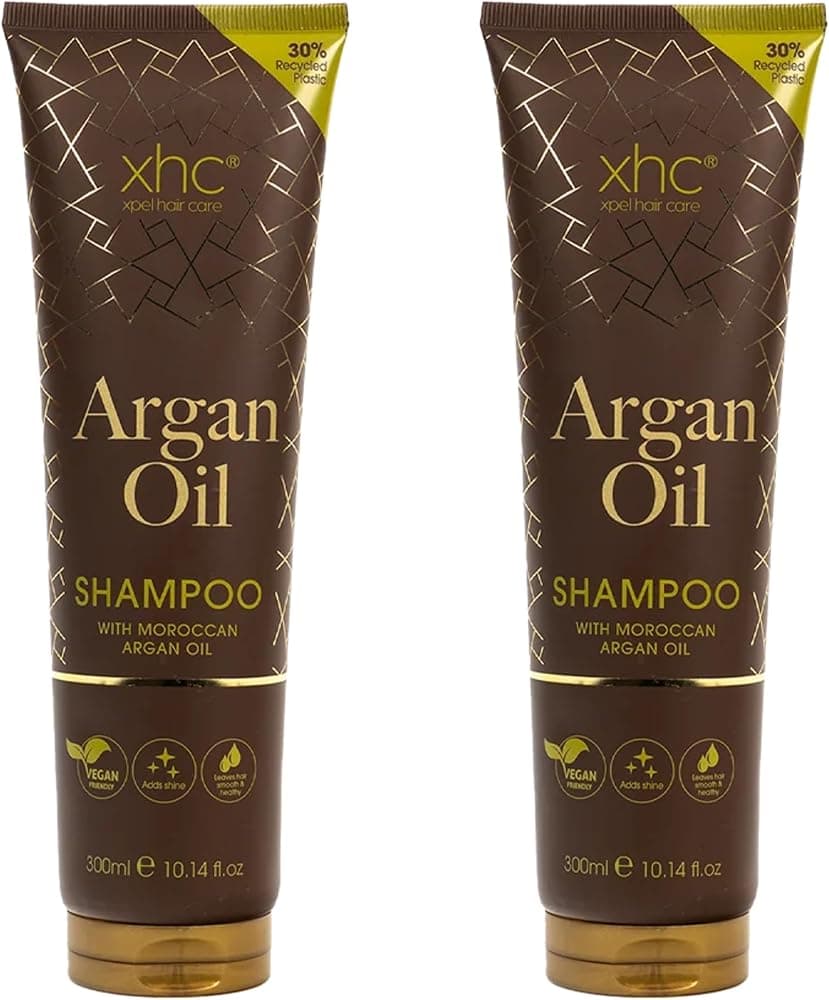
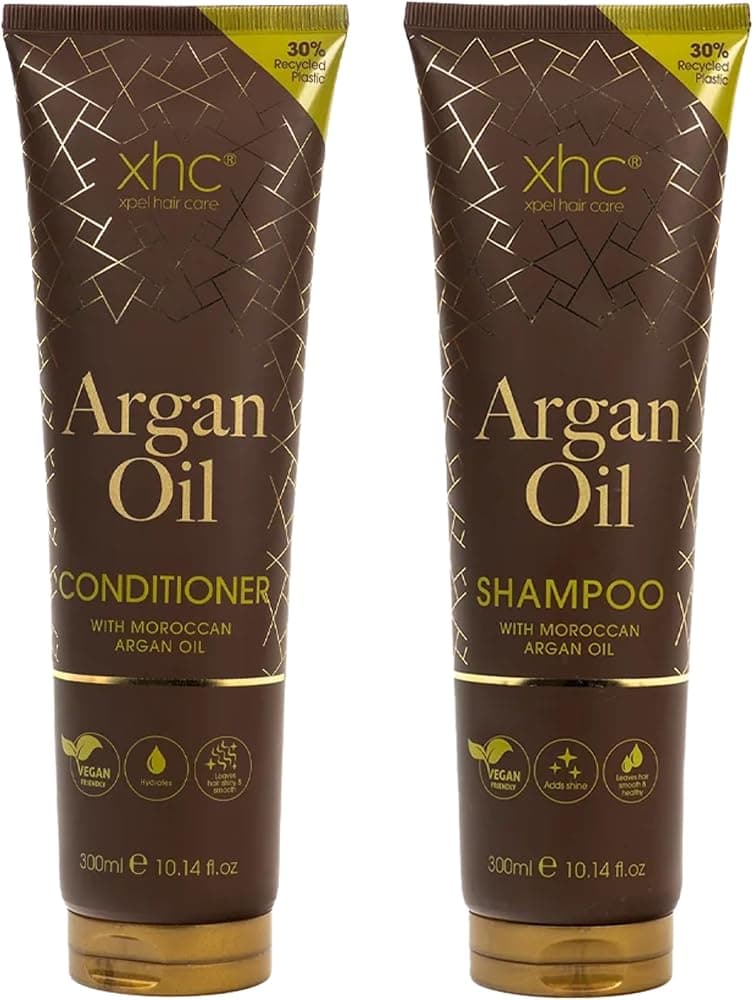
The XHC Argan Oil Shampoo and Conditioner Set pairs one 300ml shampoo with one 300ml conditioner, both formulated with Moroccan argan oil to help hydrate, smooth and restore natural shine. They're vegan friendly, paraben-free, dermatologically tested and labelled as suitable for all hair types. At the time of writing, the set was £9.99 on Amazon, which works out at about £5 a bottle.
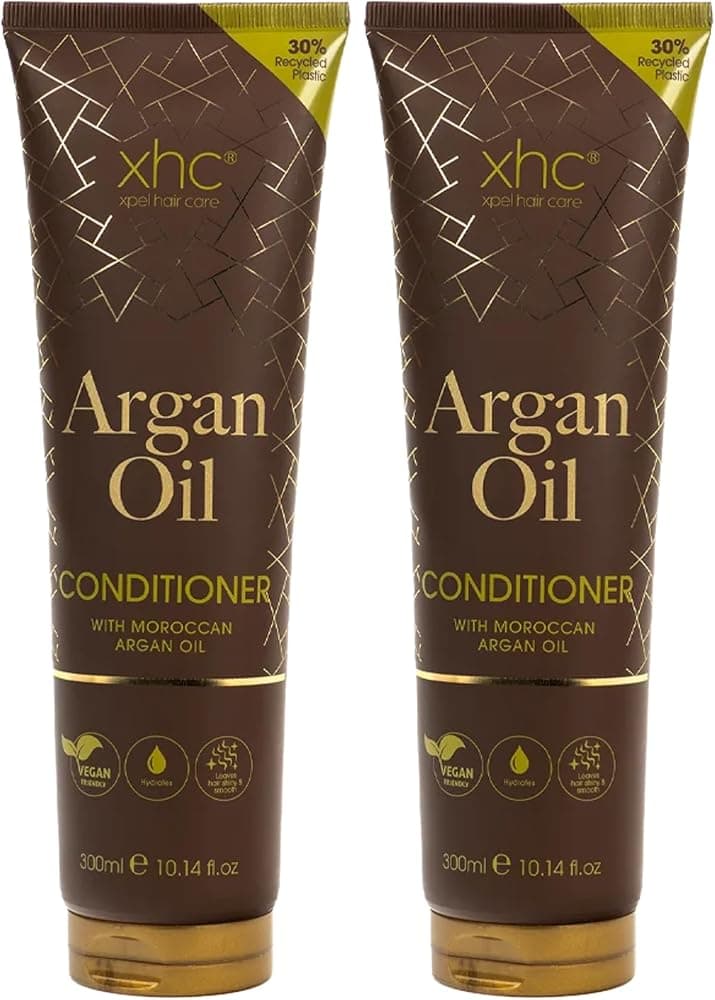
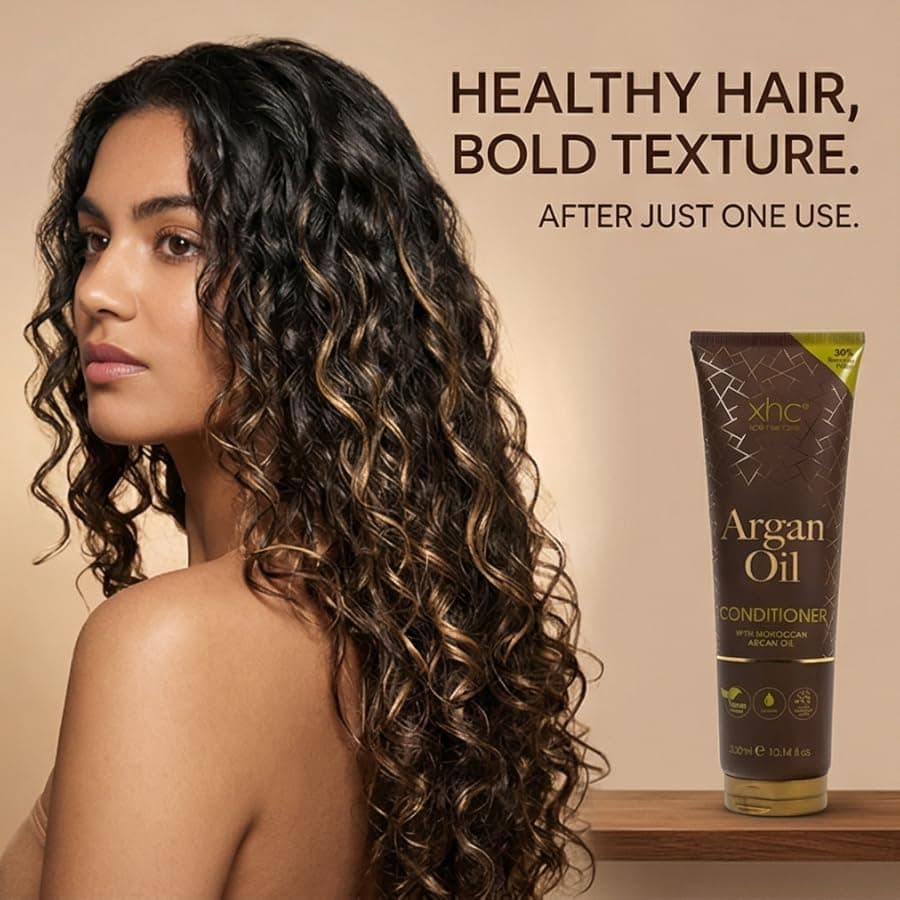
If conditioner is the bottle you run out of first, the XHC Argan Oil Conditioner Twin Pack gives you two 300ml bottles of a conditioning formula designed to soften hair, reduce dryness and make detangling easier. It's labelled as suitable for daily use.
Common argan oil mistakes to avoid
- Using too much. Greasy, flat, stringy hair is the classic sign. Wash it out and start again with a single drop.
- Putting it on your roots. Your scalp makes its own oil. Adding more at the roots usually just makes hair look unwashed sooner.
- Treating it as heat protection. Oil on hair under a hot straightener isn't protection. Use a dedicated heat protectant and keep the temperature sensible.
- Expecting permanent repair. Argan oil improves how hair looks and feels while it's there. It doesn't rebuild damaged hair, so trims and gentler styling still matter.
- Paying pure-oil prices for a blend. Check the ingredients list for Argania Spinosa Kernel Oil near the top.
- Skipping a patch test. Argan oil comes from a nut kernel. Reactions are uncommon, but if you have a nut allergy or sensitive skin, speak to a pharmacist or GP before using it, and stop if you notice any irritation.
The bottom line on argan oil
Argan oil is a smart, simple way to get softer, shinier, less frizzy hair. Think of it as a finishing touch and a conditioning boost rather than a treatment for hair growth or damage. Use a little, keep it on your mid-lengths and ends, and match the amount to your hair type.
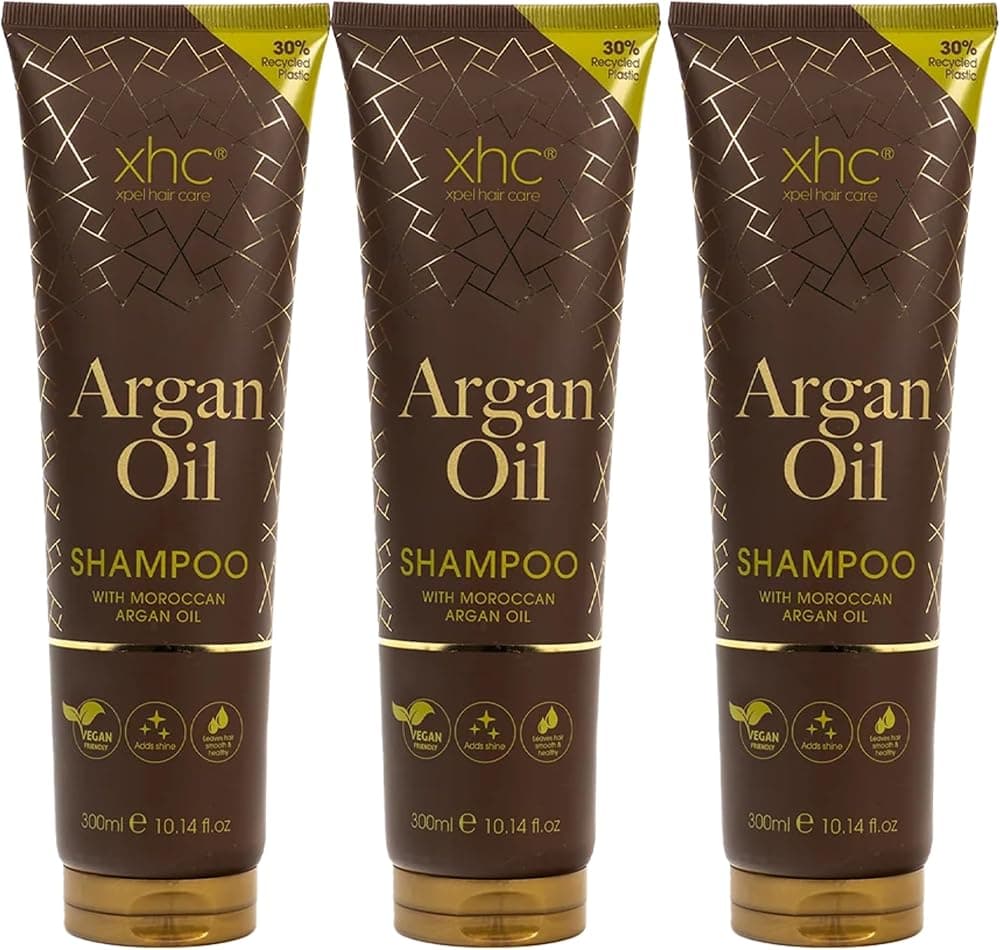
If you'd rather build argan oil into your wash routine than add another step, that's what our XHC haircare bundles are for. At PoundMart, we bundle everyday essentials into multi-packs so you can stock up once and stop running out mid-week. You can browse the full range in our haircare collection, and if dry lengths are your main worry, our guide to choosing a shampoo for dry hair is a good next read.
Frequently asked questions
Can I leave argan oil in my hair overnight?
Yes, you can use argan oil as an overnight treatment on your lengths, then wash it out in the morning. Keep it off your scalp and pillowcase by applying it to the ends and loosely plaiting or tying your hair up. If your hair is fine, a shorter pre-wash treatment of 30 minutes or so is usually enough.
Does argan oil help hair grow?
There's no good evidence that argan oil makes hair grow faster or thicker. Hair growth happens in the follicles under your scalp, while argan oil works on the hair you can already see. What it can do is reduce breakage from brushing, which helps you keep the length you already have. If you're worried about hair loss, speak to your GP.
Is argan oil good for curly hair?
Argan oil suits curly hair well because curls tend to be drier and more prone to frizz. It works best applied after a water-based leave-in conditioner, when it helps hold that moisture in and smooth the curl pattern. Apply it in sections and scrunch it in rather than raking it through.
Should I put argan oil on wet or dry hair?
Both work, for different jobs. On damp hair it helps with detangling and seals in moisture before styling, while on dry hair it tames flyaways and adds a finishing shine. Use slightly less on dry hair, as it shows more easily.
Is argan oil better than coconut oil for hair?
Neither is better for everyone. Argan oil is lighter and absorbs quickly, so it suits finishing and frizz control on most hair types. Coconut oil is heavier and solid when cool, which some people prefer as a pre-wash treatment, though it can feel too rich on fine hair.