Leave-in conditioner is a lightweight conditioner that you apply to clean, damp hair and don't rinse out. Because it stays on your hair, it keeps working until your next wash: adding softness and moisture, making detangling easier and helping to keep frizz down. It's usually thinner than a rinse-out conditioner, so it can sit on the hair without feeling heavy or greasy.
So what is leave-in conditioner doing that your usual conditioner isn't, and do you actually need one? This guide covers how it works, how it compares with rinse-out and deep conditioners, who benefits most, and exactly how to apply it so your hair feels soft rather than weighed down.
What is leave-in conditioner and how does it work?
Every strand of hair has an outer layer called the cuticle, made of tiny overlapping scales. When the cuticle lies flat, hair feels smooth, reflects light and slides past its neighbours without tangling. When the scales are lifted (by washing, heat, colouring, dry air or simple wear and tear), hair feels rough, tangles easily and frizzes.
All conditioners work by depositing ingredients that coat the strand, smooth the cuticle and reduce friction and static. The difference is what happens next:
- Rinse-out conditioner goes on after shampoo, sits for a minute or two, then most of it is washed away.
- Leave-in conditioner is formulated to be lighter, so it can stay on the hair all day without leaving it limp or sticky.
What's usually in a leave-in conditioner?
Formulas vary, but most leave-ins are built from the same few building blocks:
- Water, often the first ingredient, which is what actually hydrates hair
- Conditioning agents that smooth the cuticle and help strands detangle
- Humectants such as glycerin, which attract and hold water
- Oils or butters such as argan, avocado, olive or shea, which soften and help slow moisture loss
- Preservatives, which keep a water-based product safe to use
Leave-in vs rinse-out vs deep conditioner
The three types overlap, but each has a different job. Here's how they compare.
| Type | When you use it | How long it stays on | Typical texture | Best for |
|---|---|---|---|---|
| Rinse-out conditioner | After shampoo, every wash | A minute or two, then rinsed | Creamy | Everyday softness and detangling |
| Leave-in conditioner | On towel-dried hair after washing, or to refresh between washes | Until your next wash | Light lotion, cream or spray | Ongoing moisture, frizz control, curls |
| Deep conditioner or mask | Once a week or so | Several minutes to half an hour, then rinsed | Thick and rich | Extra care for very dry or treated hair |
Do you need both a rinse-out and a leave-in? Not always. If your hair is short, fine or oily, one or the other may be plenty. If it's dry, curly, coily, coloured or bleached, the two usually work best as a team: the rinse-out does the heavy lifting in the shower, and the leave-in keeps things soft afterwards. If you're unsure about the order of your shower products, our guide to whether conditioner goes before or after shampoo walks through it.
What does leave-in conditioner do for your hair?
A good leave-in conditioner earns its place in a routine in several ways:
- Softness between washes. Hair keeps feeling conditioned on day two and three, not just straight out of the shower.
- Easier detangling. Smoother strands slide apart more easily, so there's less pulling and snapping when you comb.
- Frizz control. Dry hair pulls moisture from damp air and swells unevenly, which is why a drizzly British morning can undo a good hair day. A leave-in helps keep the cuticle smoother. There's more on this in our guide on how to stop frizzy hair.
- Curl definition. On waves, curls and coils, a leave-in helps strands clump together into defined shapes rather than fluffing apart.
- Protection from everyday friction. Scarves, hoods, pillowcases and hair ties all rub against your hair. A conditioned surface copes better.
One thing a leave-in doesn't automatically do is protect against heat. Some formulas include heat protection, but many don't, so check the label before you reach for the straighteners.
Who should use leave-in conditioner?
Almost anyone can use one, but some hair types benefit more than others.
Curly, coily and afro hair
Natural oils from the scalp travel easily down a straight strand but struggle to follow the twists of a curl, so curly and coily hair tends to be drier, especially at the ends. Leave-in conditioner is a staple of most curly routines for that reason. We've written a full guide to leave-in conditioner for curly hair, including step-by-step application.
Dry, damaged or frizz-prone hair
If your hair has been through bleach, colour, regular heat styling or a long summer, a leave-in helps put back some of the softness and slip that damage takes away.
Fine or oily hair
You can still use a leave-in, just use less. Stick to the mid-lengths and ends, keep it away from the roots, and choose a light lotion or spray over a rich cream.
Children's hair
A little leave-in on the lengths can make combing out knots on a school morning much less of a battle. Keep it away from eyes and use only a small amount.
How to use leave-in conditioner, step by step
Application matters as much as the product. Use too much, or put it in the wrong place, and even a great leave-in will make hair feel limp.
- Wash and condition as normal. Use your rinse-out conditioner too, unless your hair is fine enough to skip it.
- Remove excess water gently. Squeeze hair with a microfibre towel or an old cotton T-shirt rather than rubbing. You want it damp, not dripping. (Curly hair is the exception: many curl routines apply leave-in to very wet hair.)
- Start with a small amount. Roughly a 20p-sized amount is plenty for shoulder-length hair. You can always add more.
- Apply to the ends first. Rub it between your palms and smooth it over the mid-lengths and ends, which are the oldest and driest part of the hair. Only take what's left on your hands up towards the roots.
- Distribute evenly. Rake through with your fingers or a wide-tooth comb, working from the ends upwards to ease out tangles.
- Style as usual. Air-dry, diffuse or blow-dry. If you're using heat, add a heat protectant unless your leave-in says it already contains one.
Using leave-in conditioner to refresh your hair
Leave-in isn't only for wash day. On day two or three, dampen your hair with a little water from a spray bottle, smooth a small amount of leave-in over the lengths and let it dry. It's a quick way to revive flat waves, frizzy ends or curls that have lost their shape overnight.
How to choose a leave-in conditioner
With so many options on the shelf, it helps to know what to look for:
- Texture that matches your hair. Sprays and light lotions suit fine or straight hair; creams suit thick, curly or coily hair.
- Ingredients you like. Nourishing oils such as argan, avocado and olive are popular for dry hair. If you avoid certain ingredients, check for labels like vegan, sulphate-free or cruelty-free.
- A scent you'll enjoy. You'll be wearing it all day, so pick one you actually like.
- Value. Leave-ins get used little and often, so a multipack can work out cheaper per bottle than buying singles one at a time.
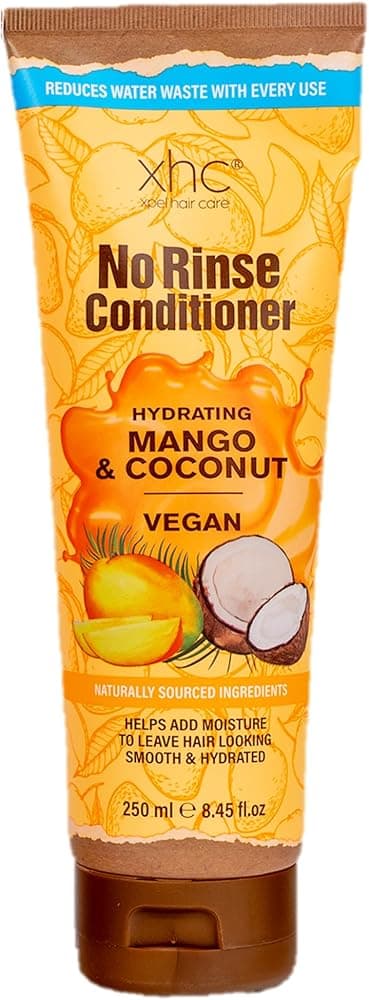
At PoundMart, our pick is the XHC No Rinse Conditioner. It's a lightweight, rinse-free leave-in made for curly, afro and dry or damaged hair. It's vegan, sulphate-free and cruelty-free, and it's infused with argan, avocado and olive oils for hydration and frizz control. It comes in three scents: Cherry & Almond, Dragon Fruit & Vanilla and Mango & Coconut.
You can buy a single 250ml XHC No Rinse Conditioner in your favourite scent, or get all three together in the 3 pack. Here's how the prices compared when we checked in September 2026:
| Option | What you get | Price | Price per 250ml |
|---|---|---|---|
| Single: Cherry & Almond or Dragon Fruit & Vanilla | 1 × 250ml | £7.99 | £7.99 |
| Single: Mango & Coconut | 1 × 250ml | £8.99 | £8.99 |
| XHC No Rinse Conditioner 3 Pack | 3 × 250ml, one of each scent | £17.99 | £6.00 |
Buying one of each scent separately would have cost £24.97, so the 3 pack saved £6.98. Prices on Amazon can change, so check the listing for the latest.
Common leave-in conditioner mistakes
A few easy slip-ups stop people getting the best from a leave-in:
- Using too much. It's the easiest mistake to make, so start small.
- Putting it on the scalp. Most leave-ins are meant for the lengths. On the roots they can make hair look greasy by lunchtime.
- Applying it to bone-dry hair. Leave-in spreads more evenly and absorbs better on damp hair. On dry hair, mist with water first.
- Treating it as a heat protectant. Unless the label says so, it isn't one.
- Never washing it out. Leave-in stays in until your next wash, not forever. If hair starts to feel coated, a normal shampoo will reset it.
The bottom line
Leave-in conditioner is a light, rinse-free conditioner that keeps hair soft, manageable and less frizzy between washes. It's especially useful for curly, coily, dry and damaged hair, but used sparingly it works for fine hair too. Apply a small amount to damp hair, focus on the ends and leave the rest to the leave-in. If you're building a routine from scratch, browse our haircare collection for shampoos, conditioners and leave-ins that work together.
Frequently asked questions
Can you use leave-in conditioner every day?
Yes, most leave-in conditioners are designed for daily use. Just keep the amount small and focus on the lengths. If your hair starts to feel heavy or coated, use a little less or skip a day, and a normal wash will clear any build-up.
Do you put leave-in conditioner on wet or dry hair?
It works best on clean, damp hair that has been gently towel-dried, because it spreads evenly and absorbs well. You can also smooth a tiny amount over dry hair to tame flyaways, ideally after a light mist of water.
Can leave-in conditioner replace regular conditioner?
For some people, yes. If your hair is short, fine or not very dry, a leave-in on its own may give you enough softness. Dry, curly, coily or treated hair usually does better with a rinse-out conditioner in the shower and a leave-in afterwards.
Can you sleep with leave-in conditioner in your hair?
Yes, it's made to stay in until your next wash, so there's no need to rinse it out before bed. To keep hair smooth overnight, try a satin or silk pillowcase, or a satin bonnet or scarf.
Is leave-in conditioner good for short hair?
It can be. Short hair still gets dry ends and flyaways, and a small amount of leave-in keeps it soft and easier to style. Use just a pea-sized amount so it doesn't look greasy.