The best way to use a leave-in conditioner for curly hair is to apply it to very wet hair straight after washing, smooth it through section by section, then scrunch upwards and let your curls dry without touching them. Applied like this, a leave-in adds moisture, helps curls clump into defined shapes and keeps frizz under control until your next wash day.
Curly hair tends to be drier than straight hair, so a good leave-in is often the most hardworking product in a curly routine. Below we explain why curls need it, how much to use for your curl pattern, a step-by-step method, and how to bring second-day curls back to life.
Why curly hair needs leave-in conditioner
Your scalp produces a natural oil called sebum. On straight hair it travels down the strand fairly easily, but on curly and coily hair every twist and bend slows its progress. The result is that the lengths and ends of curly hair are often drier than the roots.
Those bends are also where the cuticle (the hair's outer layer) is most likely to lift. A raised cuticle lets moisture escape and lets humid air in, which is why curls can go from defined to fluffy the moment you step out into a damp British morning.
A leave-in conditioner helps in three ways:
- It adds moisture that stays on the hair rather than going down the drain.
- It smooths the cuticle, which reduces frizz and helps strands reflect light.
- It encourages clumping, where neighbouring strands group together into defined curls instead of separating into frizz.
If you're new to the product itself, our explainer on what leave-in conditioner is covers the basics.
How much leave-in conditioner for your curl type
Curl patterns are often described with a number and letter system running from 2A (loose waves) to 4C (tight, zigzag coils). It's not a perfect science, and many heads of hair mix several patterns, but it's a useful starting point for how much product you'll need.
| Curl pattern | What it looks like | How to use leave-in |
|---|---|---|
| 2A to 2C (waves) | Loose S-shaped waves that can fall flat easily | A small amount of a light formula, mainly on the ends |
| 3A to 3C (curls) | Springy loops, from loose ringlets to tight corkscrews | A generous amount through the lengths, often layered under a gel or mousse |
| 4A to 4C (coils) | Tight coils and zigzags with lots of shrinkage | Plenty of product, applied section by section, often sealed with an oil or cream |
Porosity matters too
Porosity describes how easily your hair absorbs and holds on to water. The popular test of dropping a strand into a glass of water isn't very reliable, so it's better to watch how your hair behaves:
- Low porosity hair takes a while to get wet and products seem to sit on top. Use lighter formulas, apply to warm, damp hair, and use less.
- High porosity hair soaks up water quickly but dries fast and frizzes easily (often from colour, bleach or heat). It usually likes richer products and a layer of oil or cream to seal moisture in.
How to apply leave-in conditioner to curly hair, step by step
This routine works for most waves, curls and coils. Adjust the amounts for your hair.
- Wash and condition. Use a gentle shampoo on your scalp, then a rinse-out conditioner on the lengths. Detangle while the conditioner is in, using your fingers or a wide-tooth comb, starting at the ends.
- Skip the towel for now. Rinse, but leave your hair very wet. Curls take product more evenly when they're soaking.
- Section your hair. Two to four sections is enough for fine waves; thick or coily hair may need six or more.
- Use "praying hands". Rub the leave-in between your palms, then smooth each section between flat hands from roots to ends. This coats the outside of the curl without breaking it up.
- Rake it through. Run your fingers through each section to spread the product evenly.
- Scrunch upwards. Cup the ends in your palms and squeeze up towards the scalp to encourage curls to clump. You may hear a squelch, which is a good sign the hair has plenty of water.
- Add a styler if you want hold. A gel or mousse over the top helps curls keep their shape for longer.
- Plop or blot, then dry. Gently squeeze out excess water with a microfibre towel or cotton T-shirt, then air-dry or use a diffuser on low heat. Try not to touch your hair while it dries.
- Scrunch out the crunch. If you used gel, your curls may feel stiff once dry. Scrunch gently with dry hands to soften them.
The LOC and LCO methods
If your curls or coils still feel dry a day after wash day, try layering your products in a set order. Two popular methods are:
- LOC: Liquid, Oil, Cream. Water or a water-based leave-in first, then a light oil, then a cream to finish.
- LCO: Liquid, Cream, Oil. Water or leave-in first, then a cream, then an oil on top to seal.
A lotion-style leave-in can count as the "liquid" step, while a thicker leave-in can double as the "cream". There's no single right order: try each for a couple of wash days and see which leaves your curls softer for longer. For tightly coiled textures, our guide on how to moisturise afro hair goes deeper into layering.
How to refresh curls on day two and beyond
Curls rarely look the same on day three as they did on wash day, and that's normal. Rather than rewashing, try a quick refresh:
- Mist with water until the hair is damp, not soaked.
- Smooth over a little leave-in with praying hands, focusing on frizzy or flat sections.
- Scrunch and leave to dry, or use a diffuser for a few minutes.
- Re-clump individual curls by twisting them around a finger.
Protect your curls overnight
Friction from a cotton pillowcase can rough up curls while you sleep. Try a satin or silk pillowcase, a satin bonnet or scarf, or loosely gather longer curls on top of your head (the "pineapple") so you're not lying on them.
Common mistakes with curly hair leave-ins
If your curls aren't behaving, one of these could be the culprit:
- Applying to dry or barely damp hair. Product won't spread evenly and curls may frizz. Keep hair wet.
- Using too much, or too heavy a formula. Curls that feel greasy, limp or stringy are usually overloaded. Cut back or switch to something lighter.
- Brushing dry curls. It breaks up curl clumps and creates frizz. Detangle only when hair is wet and full of conditioner.
- Touching while drying. Every touch disturbs the curl pattern. Hands off until fully dry.
- Changing products too often. Give a new routine a few wash days before you judge it.
- Letting build-up pile up. If curls feel coated and won't take moisture, a thorough wash will reset things. How often that's needed depends on your hair; our guide on how often you should wash your hair can help you find your rhythm.
Choosing a leave-in conditioner for curly hair
When you're shopping for a curly hair leave-in, look for:
- Water near the top of the ingredients list, since water is what hydrates.
- Nourishing oils for softness and frizz control.
- A formula you can layer. Lightweight enough not to weigh down curls, but conditioning enough to make a difference.
- A size that suits generous use. Curly routines get through leave-in quickly, so value per bottle matters.
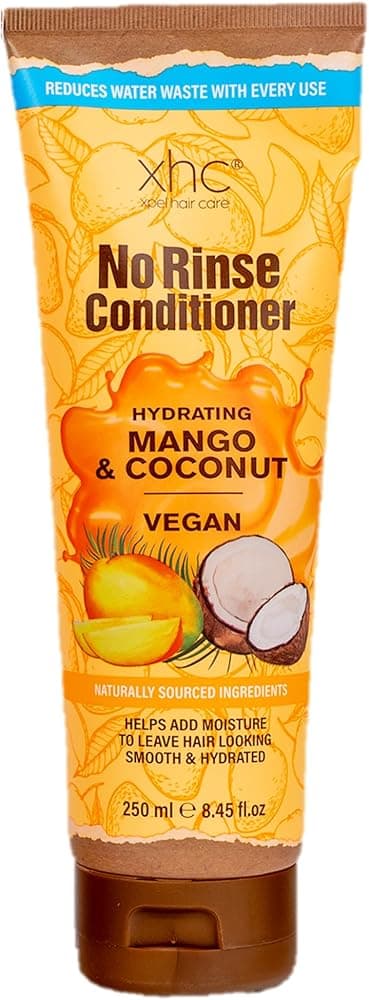
At PoundMart, we bundle XHC No Rinse Conditioner into a 3 pack with one of each scent: Cherry & Almond, Dragon Fruit & Vanilla and Mango & Coconut. It's a lightweight, rinse-free leave-in made for curly, afro and dry hair, infused with argan, avocado and olive oils for hydration and frizz control, and it's vegan, sulphate-free and cruelty-free.
When we checked in September 2026, the XHC No Rinse Conditioner 3 Pack was £17.99 for three 250ml bottles, which works out at £6.00 each. The single bottles were £7.99 or £8.99 depending on the scent. Three bottles also means you can rotate scents through the week, keep one in the bathroom and one in your gym bag, or share with someone else in the house who has curls.
Looking for shampoo and conditioner to go with it? Browse the full haircare collection.
The bottom line
The right leave-in conditioner for curly hair adds moisture, reduces frizz and helps curls clump into shape. The technique matters as much as the product: apply it to very wet hair, work in sections, use praying hands and scrunching, then leave your curls alone while they dry. Adjust the amount for your curl pattern and porosity, refresh with water and a little leave-in between washes, and you'll soon be feeling thoroughly curl-fident.
Frequently asked questions
Should you use leave-in conditioner on curly hair every day?
You can, but you probably don't need to. A common approach is to apply leave-in on wash day, then use a smaller amount when you refresh on the following days. If curls start feeling heavy or coated, use less.
Does leave-in conditioner help define curls?
Yes, it helps by encouraging strands to clump together and by smoothing frizz. For longer-lasting definition and hold, many curly routines add a gel or mousse on top of the leave-in.
Can I use leave-in conditioner instead of gel?
You can, if you like a soft, touchable finish and don't need much hold. Leave-in conditioner moisturises and softens but doesn't set curls in place the way a gel does, so on humid days your curls may lose shape sooner.
Why do my curls feel greasy after using leave-in conditioner?
It's usually a sign of too much product, a formula that's too heavy for your hair, or product applied too close to the roots. Try half the amount, keep it to the mid-lengths and ends, and apply it to wetter hair so it spreads more thinly.
Is leave-in conditioner good for wavy hair?
Yes, but waves are easily weighed down, so use a light formula and a small amount. Focus it on the ends, scrunch it in, and consider a light mousse for hold.