
Fluoride levels on toothpaste are shown as 'ppm' (parts per million) printed on the tube or the box, usually in the small print near the ingredients list. Knowing how to read fluoride levels on toothpaste means finding that number and matching it to your age group, because the right strength for a toddler is not the right strength for a teenager or an adult. Get it wrong and you're either under-protecting adult teeth or giving a very young child more fluoride than they need.
This matters more in a family bathroom than people realise. If everyone from a three-year-old to a parent is sharing one tube, or grabbing whichever toothpaste is nearest the sink on a rushed Tuesday morning, it's easy to end up using the wrong strength for weeks without noticing. The good news is that checking is quick once you know where to look.
How to read fluoride levels on toothpaste: finding the number
The ppm figure is a legal requirement on toothpaste packaging in the UK, but it's rarely the headline on the front of the tube. Marketing words like 'whitening', 'fresh' or 'kids' formula' sit on the front; the actual fluoride content sits in the ingredients or technical information on the back or side, often next to the word 'fluoride' itself, written as something like '1450ppm F' or 'sodium fluoride 0.32%'.
A few practical pointers:
- Look on the back panel, not the front. Front-of-pack claims describe the flavour and the marketing angle, not the strength.
- The number is usually followed by 'ppm' or 'ppm F' (parts per million fluoride).
- If a tube only states a percentage of sodium fluoride or sodium monofluorophosphate, that converts to a ppm figure, but it's not always printed in plain ppm terms. If you can't work it out, a pharmacist can usually tell you at a glance.
- Children's toothpaste almost always states the ppm clearly because it's one of the main things parents are told to check.
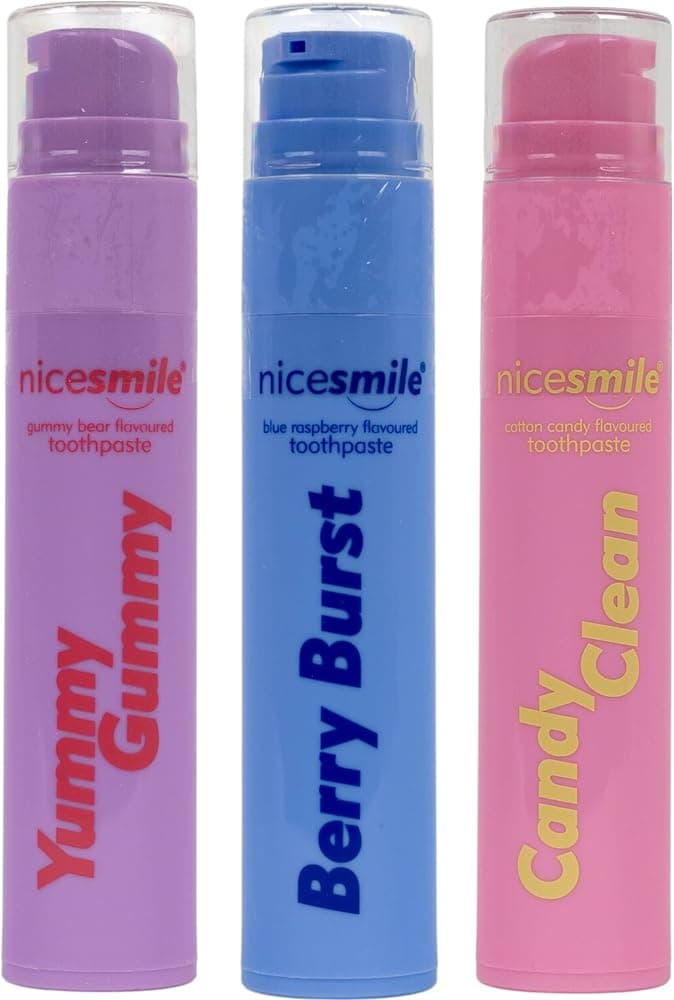
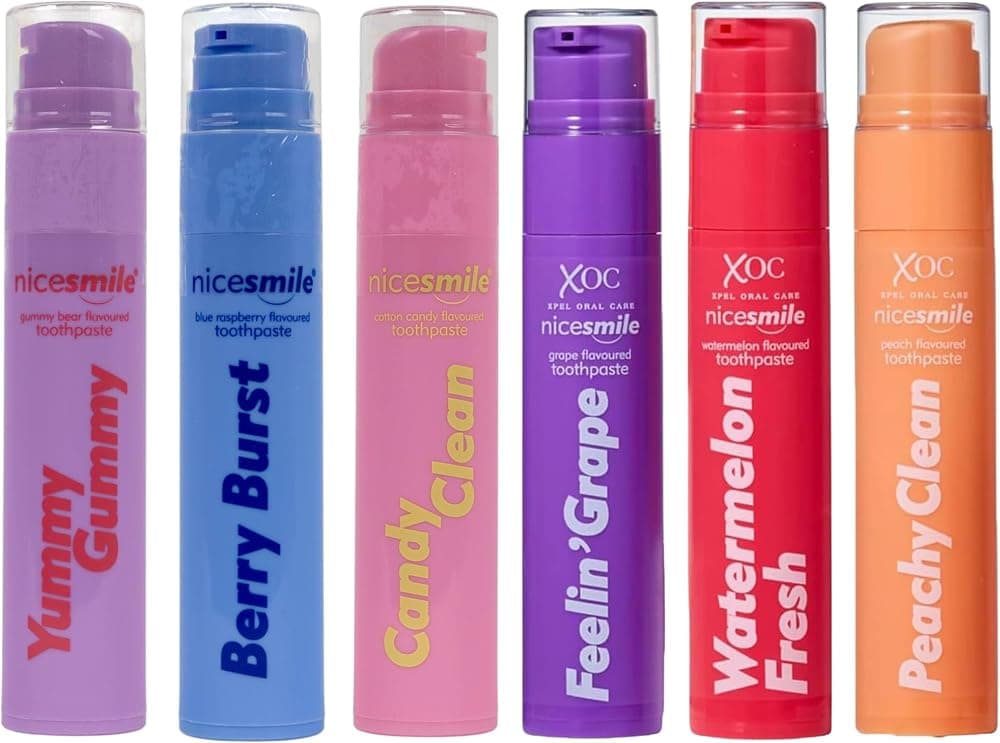
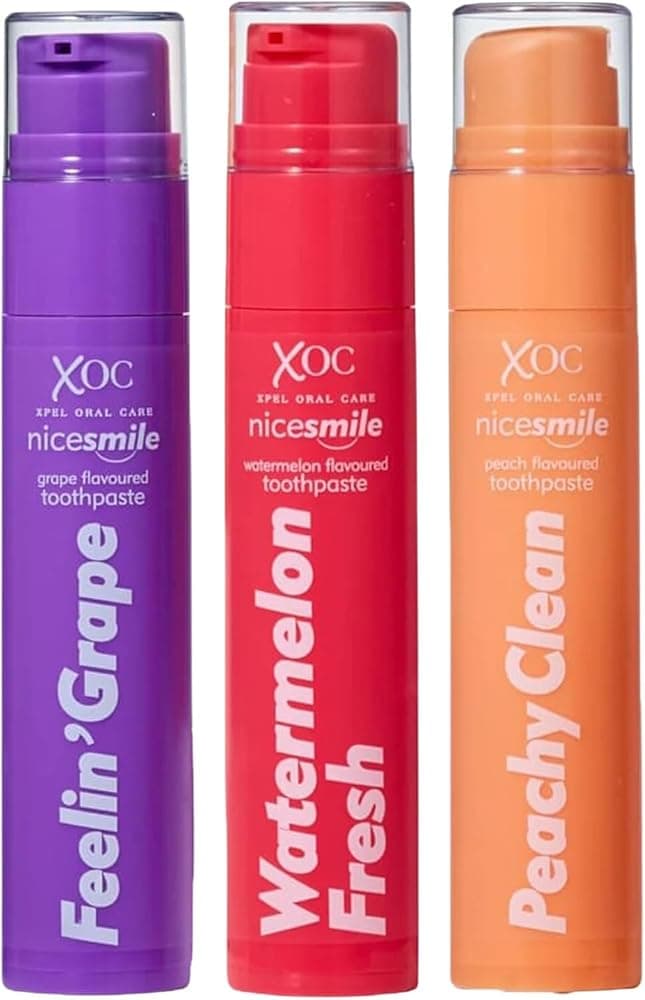
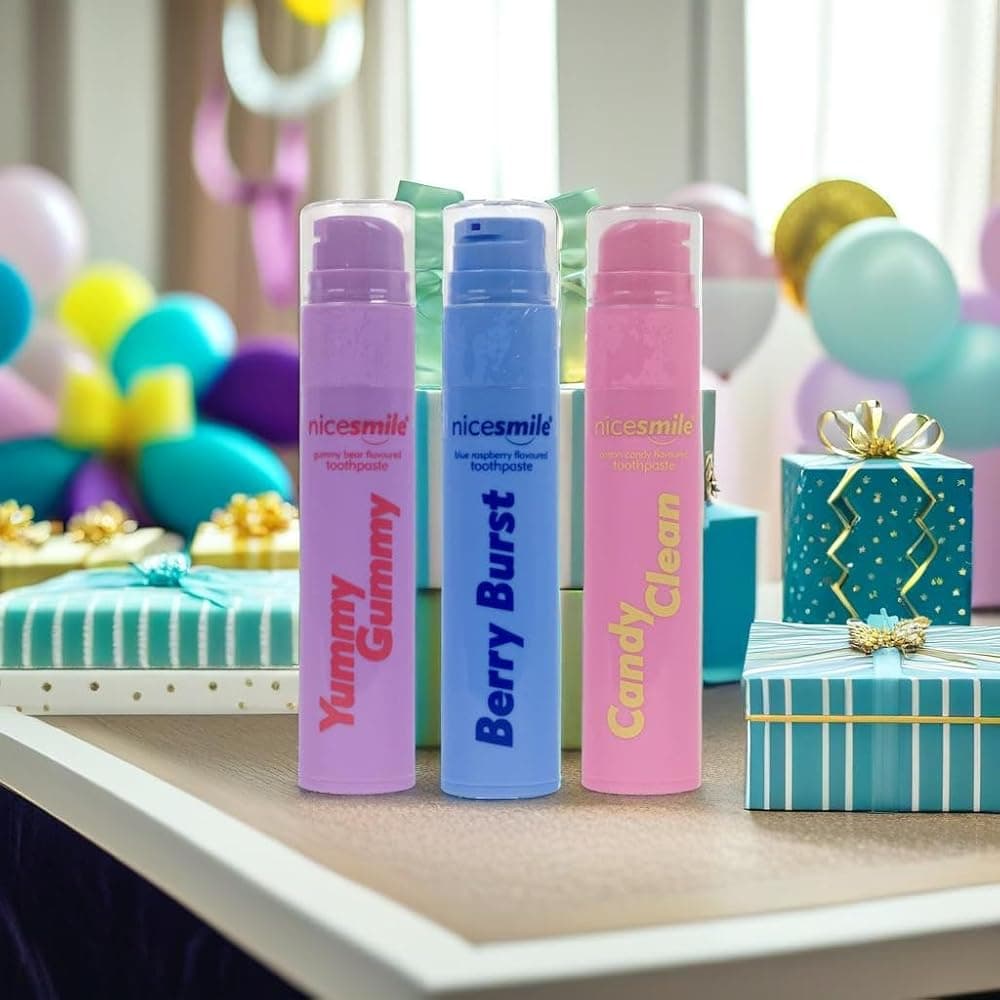
If you buy a Nice Smile tube from PoundMart, the ppm isn't listed in the product description on Amazon, so check the tube itself when it arrives and compare it against the NHS guidance below before deciding who in the house should use it.
What the NHS actually recommends by age
Once you've found the number, here's what to do with it. NHS guidance sets out fluoride strength by age, and it's worth keeping somewhere visible if you've got more than one age group brushing in the same bathroom:
- Under 3 years old: use a smear of toothpaste containing no less than 1,000ppm fluoride.
- Ages 3 to 6: use a pea-sized amount of toothpaste containing more than 1,000ppm fluoride.
- Adults and teenagers: use toothpaste containing 1,350 to 1,500ppm fluoride.
Alongside the strength, the NHS recommends brushing twice a day for about two minutes, last thing at night and at one other time during the day, and spitting out rather than rinsing with water afterwards, so the fluoride stays on the teeth a little longer. If you want the fuller picture on why fluoride matters in the first place, our plain-English guide to what fluoride does for teeth covers the basics without the jargon.
For a closer look at exactly how much toothpaste to put on the brush at each age, which trips people up almost as often as the ppm number, see how much toothpaste a child should use.
Common mistakes in a shared family bathroom
A few patterns come up again and again in households juggling different ages and a busy sink:
- One tube for everyone. It's tempting when the weekly shop is creeping up, but an adult-strength toothpaste isn't automatically wrong for a six-year-old, and a children's toothpaste may be under-strength for an adult. Check the ppm for whoever is using it.
- Grabbing whatever's nearest. On a school morning with four people needing the bathroom, it's easy to lose track of which tube is which, especially once the box is binned and only the tube is left by the sink.
- Assuming flavour tells you strength. A fruity or sweet flavour aimed at kids doesn't automatically mean a lower ppm, and a plain mint one doesn't automatically mean it's adult strength. The only reliable indicator is the number itself.
- Running out mid-week and buying the first thing seen. When a tube runs dry on a Wednesday, it's easy to pick up whatever's cheapest or closest without checking it matches what the rest of the household needs.
Keeping single tubes clearly assigned, or buying a flavour that only the children like so it's obvious whose tube is whose, solves most of this without any extra effort.
Making it easier to keep the right strength in stock
Once you know the ppm you need for each person in the house, the practical problem becomes keeping enough on hand so nobody is brushing with the wrong tube, or nothing at all, because the shop ran out on a Tuesday. This is really a stocking problem rather than a fluoride problem, and it's solved the same way most household essentials are: buying in a size that matches how many people actually use it.
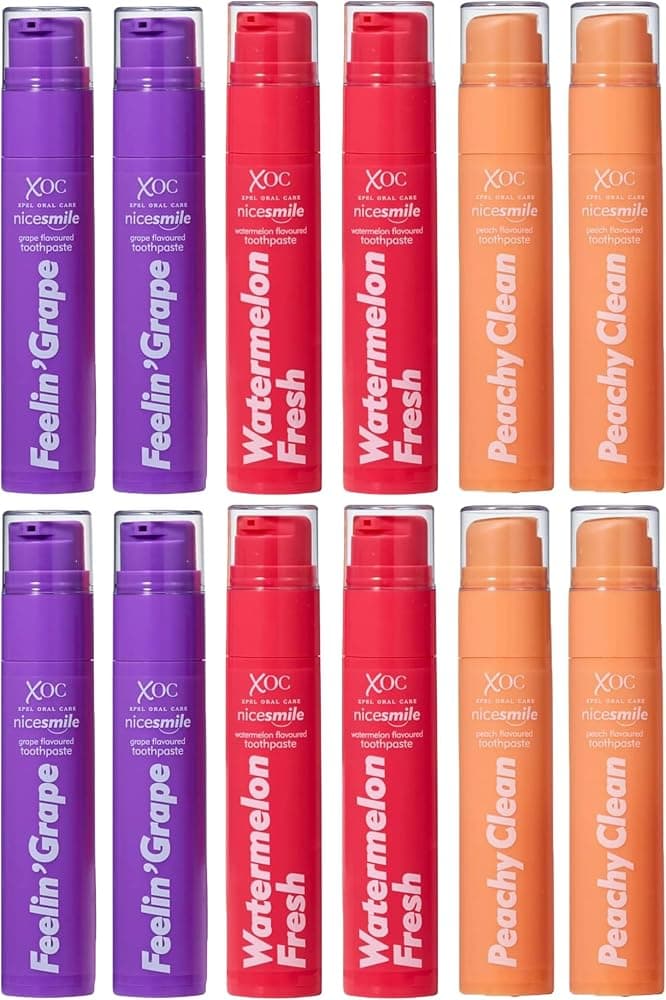
A single bathroom shared by four goes through toothpaste faster than most people plan for. Buying in bulk, rather than replacing one tube at a time, tends to work out cheaper per tube and means you're not caught short when someone forgets to mention the tube is nearly empty. Nice Smile's 12 pack toothpaste bundle gives a household four flavours across twelve tubes, which suits a house where children and adults are all using their own, clearly separate tube rather than squabbling over one.
If you'd rather pick flavours individually or start smaller, the full toothpaste collection shows every pack size, from single tubes to multi-packs. Whichever size you choose, the ppm is still worth checking on the tube itself once it arrives, because that's the detail that actually determines whether it's right for the person using it, not the flavour or the packaging.
If you're trying to get the whole household's toiletries spend under control rather than just the toothpaste, how to save money on toiletries has wider tips that go beyond just buying in bulk. And if you've got questions about orders, delivery or returns once you've bought, the FAQ page covers the practical side, or you can get in touch directly.
Frequently asked questions
Where exactly is the ppm number printed on a toothpaste tube?
It's usually on the back or side of the tube or box, near the ingredients list, written as a number followed by 'ppm' or 'ppm F'. It's rarely on the front, where the branding and flavour claims sit instead.
Can I use the same toothpaste for a toddler and a teenager?
Only if the ppm suits both. A toddler under 3 needs a smear of toothpaste with no less than 1,000ppm, while a teenager needs 1,350 to 1,500ppm like an adult. If one tube doesn't cover both ranges, it's worth keeping separate tubes for separate ages.
Does whitening toothpaste have different fluoride levels to regular toothpaste?
Not necessarily. Whitening is about removing surface stains and is a separate feature from fluoride strength. Always check the ppm separately from the whitening claim, since one doesn't tell you the other. For more on what whitening toothpaste can and can't do, see does whitening toothpaste actually work.
What if I can't find a ppm number on a tube at all?
It should be there by law on toothpaste sold in the UK, but if it's genuinely missing or unclear, a pharmacist can usually advise, or you can contact the manufacturer directly. If you have a dental concern rather than a labelling question, a dentist is the right person to ask.
How often should fluoride toothpaste be replaced or checked?
Toothpaste itself has a shelf life worth checking separately (see does toothpaste expire for the details), but there's no need to switch fluoride strength as a child grows unless their age moves them into a new NHS bracket. It's also worth remembering to replace toothbrushes every three months, regardless of toothpaste strength.