
How to brush a toddler's teeth comes down to three things: twice a day, two minutes, and fluoride toothpaste at the right level for their age. Nobody expects a two-year-old to brush like a dentist. At this stage you're building a habit that will last, and you're doing most of the actual brushing yourself until your child has the hand control to do it well, usually around age seven.
The battles are normal. The squirming, the clamped lips, the sudden hatred of mint: most parents go through all of it. What makes a difference is a routine that's easy to repeat every single night, even when you're tired and the bath's running late.
How to brush a toddler's teeth, step by step
- Pick a position you can hold. Standing behind your toddler with their head tilted back against you gives you a clear view and stops them wriggling away. Some parents find it easier sitting on the edge of the bath with the child on their lap, facing away.
- Use the right amount of toothpaste. A smear for under-threes, a pea-sized blob for three to six year-olds. More toothpaste doesn't clean better, it just gets swallowed.
- Brush in small circles, covering the front, back and chewing surfaces of every tooth. Pay extra attention to the back teeth and the gumline, where plaque tends to build up unnoticed.
- Aim for two minutes, twice a day: once in the morning and once last thing before bed. The bedtime brush matters most, because saliva flow drops overnight and sugars left on teeth have longer to do damage.
- Spit, don't rinse. Rinsing with water washes away the fluoride that's just been doing its job. A quick spit into the sink is all that's needed.
If your toddler clamps their mouth shut, singing a short song while you brush, or counting teeth out loud, can buy you enough time to get round the whole mouth without turning it into a standoff.
Getting the fluoride level right for their age
Fluoride is what actually protects the teeth, so the strength of the toothpaste matters more than the flavour. NHS guidance is specific by age:
- Under 3s: a smear of toothpaste with no less than 1,000ppm fluoride.
- Ages 3 to 6: a pea-sized amount with more than 1,000ppm fluoride.
- Adults and older children: toothpaste with 1,350 to 1,500ppm fluoride.
Always check the fluoride level printed on the side of the tube or the packaging before you buy, since it varies between products and isn't always obvious from the front of the pack. If you're not sure how to find it, this guide to reading fluoride levels on toothpaste walks through where to look and what the numbers mean. For more on what fluoride actually does once it's on the teeth, see this plain-English explainer.
Nice Smile toothpaste is listed for both kids and adults, so it's worth checking the pack against your child's age before you buy, the same as you would with any toothpaste.
When your toddler won't brush (and other common problems)
Most brushing problems have a fairly ordinary cause. Here are the ones parents run into most often.
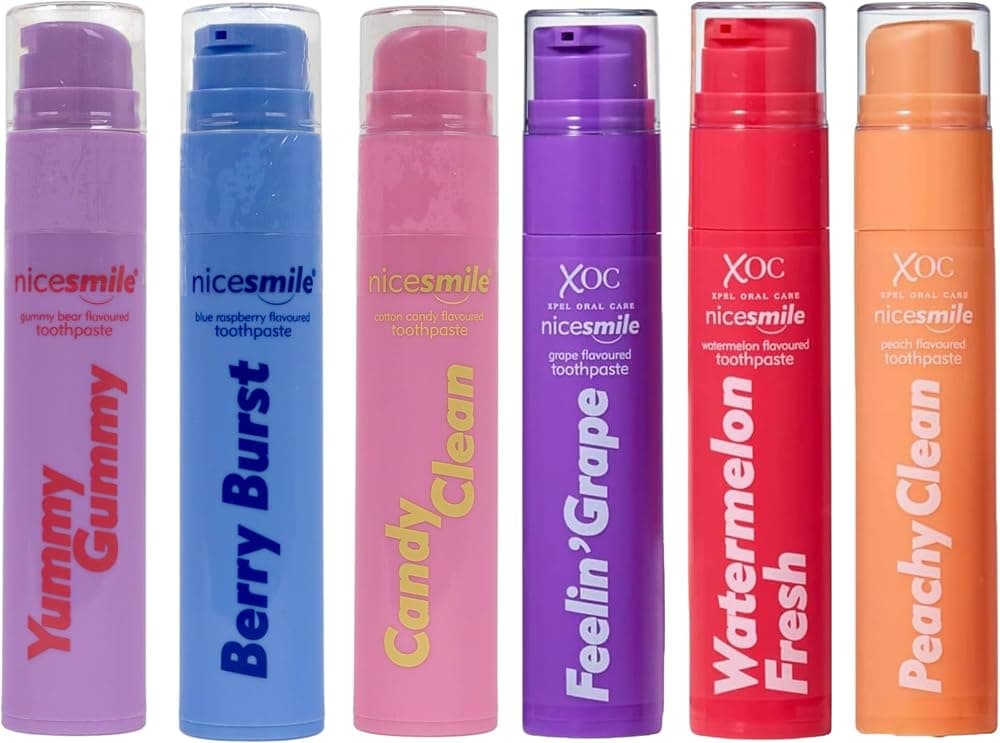
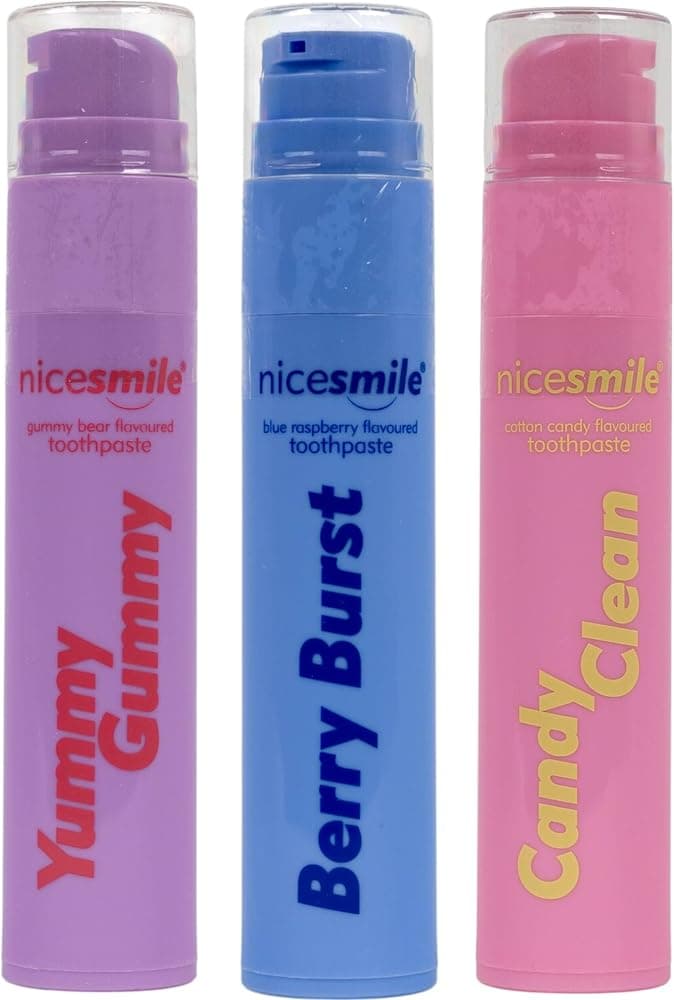
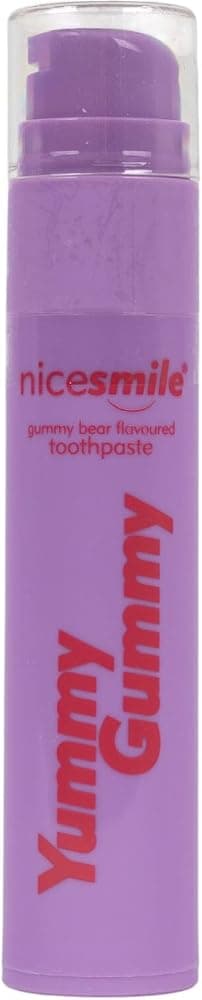
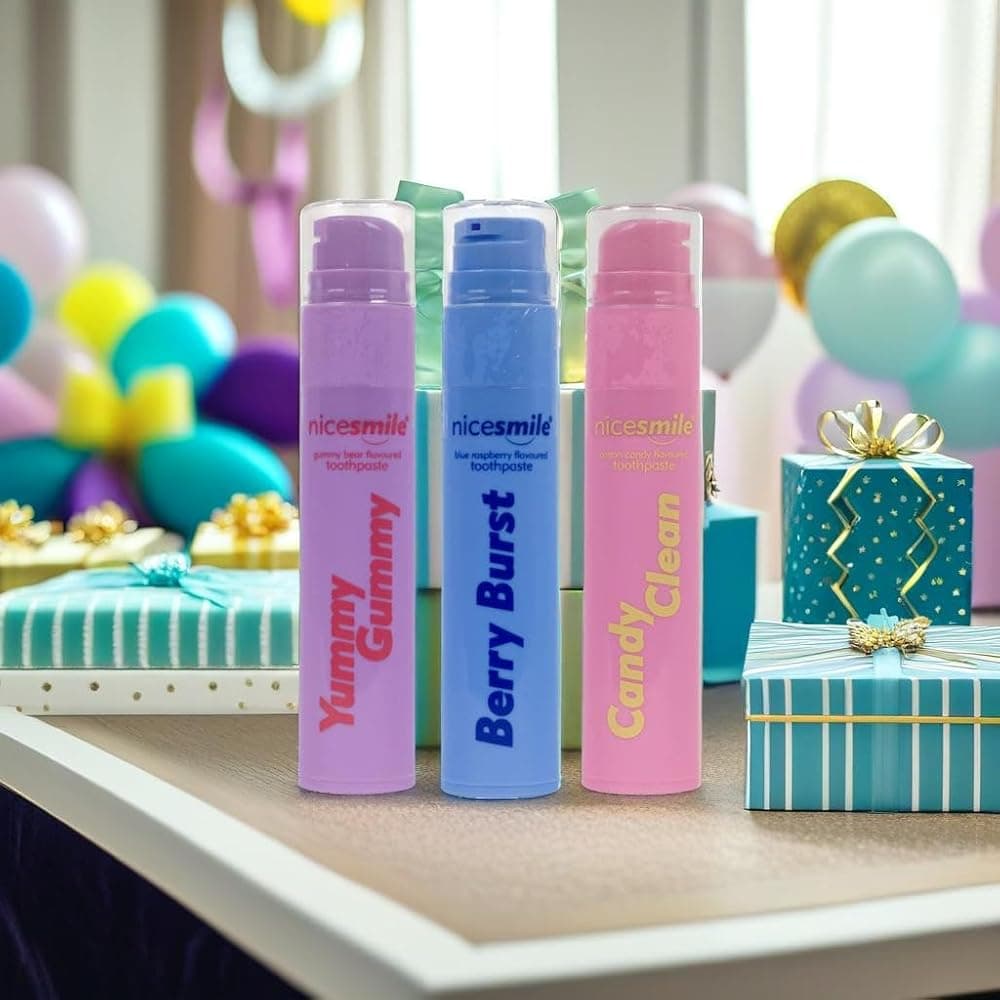
Refusing mint. A lot of toddlers genuinely dislike the taste and sting of mint toothpaste, and no amount of persuasion changes that. Switching to a fruity or sweet flavour often solves the problem overnight. Nice Smile comes in flavours like Watermelon Fresh, Feelin' Grape, Peachy Clean, Berry Burst, Yummy Gummy and Candy Clean, so there's usually one that suits a fussy mouth. The Berry Burst, Yummy Gummy and Candy Clean 3 pack is a good one to try if your toddler likes sweeter tastes. For more on why this happens and other swaps worth trying, read toothpaste for kids who hate mint.
Bedtime battles. These usually ease once brushing happens at the same point in the routine every night, rather than being squeezed in whenever there's time. Letting your toddler hold their own brush first, then finishing the job yourself, gives them a sense of control without skipping proper coverage. There's more detail on building a routine that survives tired evenings in how to build a brushing routine that actually sticks.
School mornings. Keeping a spare tube in a school bag or at a grandparent's house means a forgotten brush doesn't derail the whole morning. It also helps to settle on one flavour your child actually likes, rather than switching constantly and triggering fresh refusals.
How much to use. If you're unsure whether you're using too much or too little, this age-by-age guide to how much toothpaste a child should use sets out the amounts clearly.
Packing toothpaste for a family holiday
A 60g tube is a convenient size for hand luggage, but airline liquid rules vary by airport and change from time to time, so check your departure airport's current rules before you pack. Packing one tube per child in their own flavour avoids arguments over whose toothpaste is whose, and a spare tube in the suitcase covers you if one goes missing or runs dry mid-trip. For a fuller packing list that covers more than just toothpaste, see the travel toiletries checklist.
Keeping costs down with more than one child
Once you've got two or three children brushing twice a day, tubes disappear faster than you'd expect, especially if everyone has a different favourite flavour. Buying in bigger bundles generally costs less per tube than buying single tubes repeatedly, so it's worth checking the toothpaste collection for multi-packs that mix flavours, rather than restocking one tube at a time. If you want the maths behind whether bigger packs are really cheaper, this honest look at multipacks breaks it down.
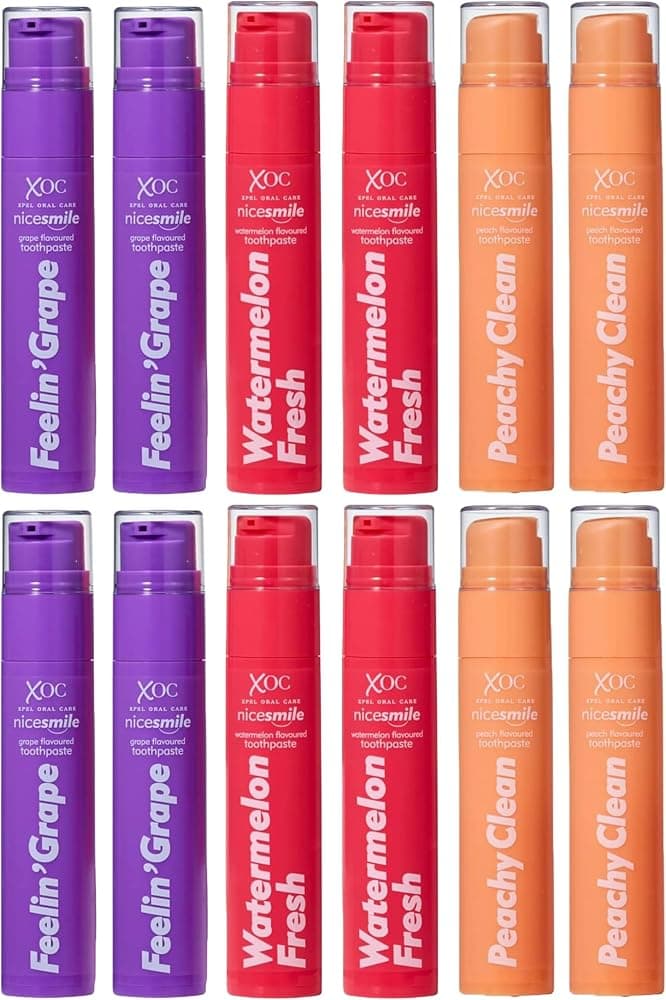
If you'd rather stock up once and stop running low mid-term, the 12 pack toothpaste bundle covers a few months of brushing for a family without repeat orders. Any questions about an order, get in touch and we'll help sort it out.
Frequently asked questions
At what age should I start brushing my toddler's teeth?
As soon as the first tooth appears, usually around six months. Brush twice a day from that point using a smear of fluoride toothpaste with no less than 1,000ppm, building up to a pea-sized amount around age three.
How do I get a toddler to open their mouth for brushing?
A consistent position, a short song or counting game, and letting them hold the brush first all help. Avoid turning it into a negotiation; a calm, matter-of-fact approach most nights works better than persuasion each time.
Is flavoured toothpaste as effective as mint for toddlers?
Flavour doesn't affect how well toothpaste cleans or protects teeth, fluoride level does. A fruity or sweet flavour your toddler will actually tolerate is a better choice than a mint toothpaste they refuse to use.
When should I take my toddler to see a dentist?
The NHS recommends children see a dentist regularly from the time their first tooth appears, and sooner if you notice anything unusual such as discolouration, pain or swelling. A dentist or your GP is the right person to ask about any concerns beyond everyday brushing.
How long should a tube of toddler toothpaste last?
It depends on how much is used per brush and how often, but a 60g tube generally lasts several weeks with twice-daily smear or pea-sized amounts. If you're working out what to budget for across a few children, this breakdown of how long a tube actually lasts has the detail.