If you want to know how to store a shampoo bar so it actually lasts, the short answer is this: keep it out of standing water, let it dry fully between washes, and keep it somewhere with airflow rather than sealed in a steamy shower corner. A bar left sitting in a puddle on the shower floor will turn soft and mushy within days, no matter how good the formula is.
For curly and afro hair, shampoo bars are a genuinely useful swap, but they behave differently from a bottle of liquid shampoo. Getting the storage and the technique right makes the difference between a bar that lasts for months and one that dissolves into a sad sliver by the second wash. Here's how to get both right, with the common questions people ask once they've made the switch.
How to store a shampoo bar between washes
A shampoo bar is mostly solid soap or surfactant, and like any bar of soap, its biggest enemy is water it can't drain away from. Every time it sits in a puddle, it absorbs moisture, softens, and wears down faster than it should.
A few habits make a real difference:
- Use a draining dish, not a flat surface. A ridged soap dish or a small wire rack lets water run off instead of pooling underneath the bar. A flat dish or the shower shelf is the most common reason bars turn to mush early.
- Keep it away from the direct spray. Position it somewhere it won't be constantly hit by the shower stream, so it gets a chance to dry between uses rather than staying wet all day.
- Let it air dry fully before your next wash if you can. If you wash hair daily, this matters less, but if you wash every few days, the bar will keep its shape far better if it's bone dry in between.
- Travelling with it? Pop it in a tin or a breathable pouch rather than a sealed plastic bag, especially if it's still slightly damp. Sealing in moisture is what causes bars to go soft and slimy in a wash bag. If you're packing for a trip, it's worth checking a travel toiletries checklist so you're not caught out by other liquids rules at the same time.
None of this is complicated, but it's the bit people skip, and it's the single biggest reason some shoppers decide bars 'don't work' when really it was a storage problem, not a product problem.
Washing curly and afro hair with a bar, step by step
Curly and afro hair needs a slightly different approach to a bar than straight hair does, mainly because the goal is usually to cleanse without stripping moisture or roughing up the cuticle and causing frizz.
- Wet hair thoroughly first. Curls need more water than you'd think before a bar will glide rather than drag.
- Work the bar into your hands or directly onto sectioned hair, rather than scrubbing it hard against the scalp in one go. Rubbing a bar straight onto dry-feeling ends can be too abrasive for fragile curl ends.
- Focus on the scalp, let the lather carry down. The scalp is where oil and product build up; the lengths usually need far less direct scrubbing.
- Rinse well, then follow with conditioner. A 2-in-1 bar covers both steps, but on very dry or tightly coiled hair, some people still prefer to follow with a separate leave-in. If you're not sure which order to use products in, conditioner before or after shampoo explains the logic clearly.
- Detangle gently while hair is still slippery with conditioner, working from ends to roots with fingers or a wide-tooth comb. Detangling dry curls after they've air dried is where most breakage happens.
If frizz in damp weather or curls losing their shape by day two is your main complaint, the bar itself is only half the story. How you dry and protect the style afterwards matters just as much, and it's worth reading how to stop frizzy hair alongside this.
Picking a scent and avoiding the common mistakes
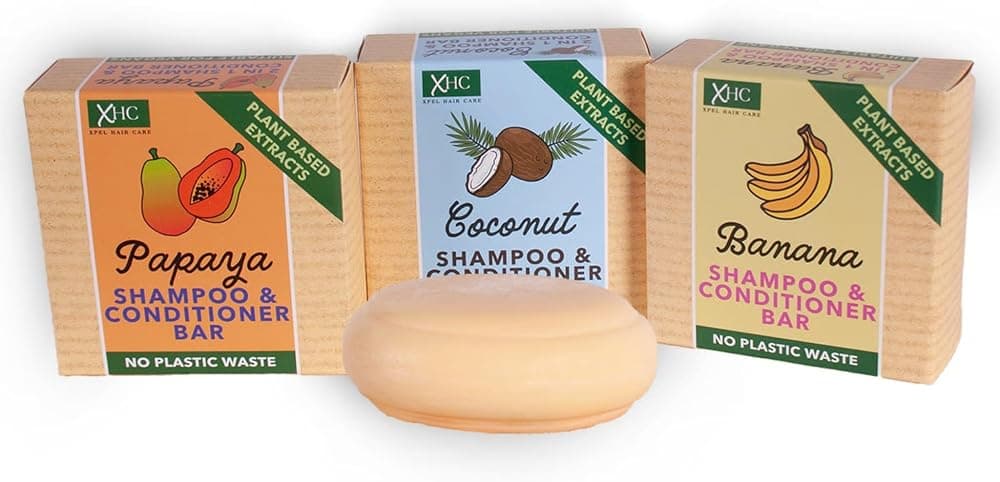
XHC 2-in-1 Shampoo & Conditioner Bars come in Coconut, Banana and Papaya, and all three are plastic-free, vegan friendly and built to be travel-friendly, which matters if you're trying to cut down what goes in your wash bag or your bathroom bin. Beyond scent preference, the choice between them comes down to personal taste rather than one being 'better' for curls, since all three work as a combined shampoo and conditioner step.
A few mistakes are worth avoiding, whatever scent you pick:
- Don't expect it to behave like a bottle. A bar lathers differently, and it can take a wash or two to find the right amount of water and pressure.
- Don't skip the scalp. Build-up at the roots is what causes hair to look flat or weighed down, even on curls that don't get washed often.
- Don't let it sit wet between uses. As covered above, this is the fastest way to waste a bar you've paid for.
- Don't assume one bar suits every wash day. Some people alternate a bar with a leave-in or no-rinse conditioner on the days in between, particularly if hair is on the drier side. You can browse the full haircare collection to see what pairs well with a bar routine.
If you're new to bars generally, a simple walkthrough like how to use a shampoo bar is a useful companion to this one, especially for the first few washes while you're finding your rhythm.
Fitting bars into a long wash day routine
For many people with curly or afro hair, wash day is already a long process involving detangling, cleansing, deep conditioning and styling. A shampoo bar doesn't shorten that process on its own, but it can simplify it, since one bar does the job of both a shampoo and a conditioner step, which is one less bottle to reach for.
Where bars genuinely help is consistency. A bar that lives on a draining dish by the shower is always there, doesn't leak in a bag, and doesn't run out unexpectedly the way a nearly-empty bottle does. If moisturising dry ends and keeping curls soft through the week is the priority, it's worth reading how to moisturise afro hair for the steps that come after the bar, such as sealing in moisture and protecting curls overnight.
Students and anyone trying to cut down bathroom clutter also tend to find bars useful simply because they take up less space and don't need to be decanted for a bag. If you're setting up a new bathroom shelf from scratch, a few more plastic free bathroom swaps are worth considering at the same time.
If you'd like to try a bar before committing to a full routine change, PoundMart sells the XHC 2-in-1 Shampoo & Conditioner Bars as a 3 pack or a 6 pack, so you can work out which scent and wash frequency suits your hair before stocking up properly. If you've got a question about an order, you can always get in touch.
Frequently asked questions
How long does a shampoo bar last?
It depends on how often you wash, how much you use per wash, and crucially, how it's stored between uses. A bar kept dry on a draining dish will outlast one left sitting in water, often by a noticeable margin, simply because it isn't absorbing moisture it doesn't need.
Can I use a shampoo bar on afro or very curly hair without it drying out my curls?
Yes, though the technique matters more than with liquid shampoo. Focus the bar on the scalp rather than scrubbing it directly along dry lengths, rinse thoroughly, and follow with a conditioning step if your hair tends to feel dry. A 2-in-1 bar is designed to cover both cleansing and conditioning in one go.
Why has my shampoo bar gone soft and mushy?
This is almost always a storage issue rather than a fault with the bar itself. Standing water, a sealed wash bag, or a flat non-draining dish will all soften a bar faster than normal use would. Switching to a draining dish and letting it dry fully between washes usually fixes it.
Is a shampoo bar better than a bottle for curly hair?
Neither is automatically better. Bars suit people who want less plastic, easier travel and a simpler wash day with one product instead of two. Bottled shampoo and conditioner can give more control over separate steps, which some curlier or more damaged hair types prefer. It's worth trying both to see what your hair and your routine actually need.
Can I take a shampoo bar on a flight in hand luggage?
Solid bars generally aren't subject to the same liquid restrictions as bottled shampoo, which is part of why they're popular for travel. Airport rules do vary and change, so always check your specific airport's current guidance before you fly.