
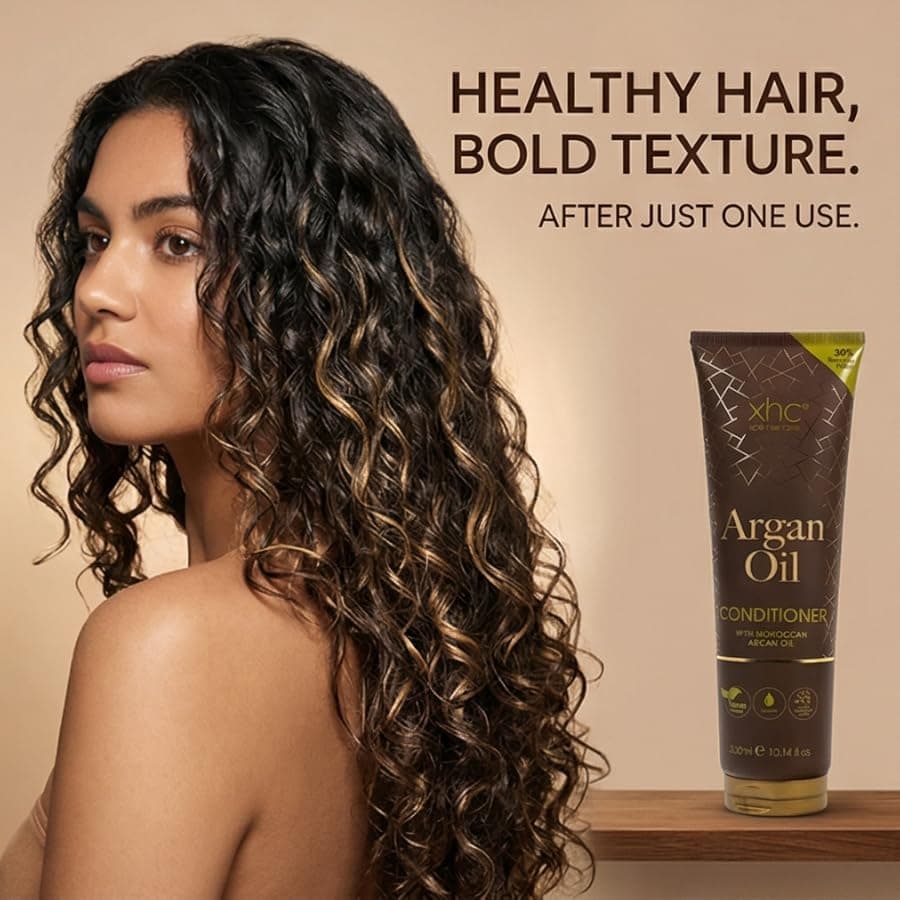
If you're wondering how to use argan oil conditioner on curly or afro hair, the short answer is: apply it generously to soaking wet hair in sections, work it through with your fingers from mid-length to ends, leave it for a few minutes, then rinse with cool to lukewarm water. The detail matters more for curly and afro hair than for straight hair, because the oil needs to reach every strand without weighing the curl pattern down.
Curly and afro hair tends to be drier than straight hair, simply because natural oils from the scalp have further to travel along a bent or coiled strand. That's why a conditioner built around argan oil, which is nourishing and moisturising rather than stripping, tends to suit curls better than a generic rinse-out. Here's how to get the most from it, and how to avoid the common mistakes that leave curls either dry and frizzy or flat and greasy.
How to use argan oil conditioner: a step-by-step routine
The order and method matter as much as the product itself. Try this:
- Shampoo first, gently. Focus shampoo on the scalp rather than scrubbing it through the lengths. Curly and afro hair doesn't need daily washing, and over-washing strips the oils you're trying to protect. If you're unsure how often to wash, how often should you wash your hair covers it by hair type.
- Squeeze out excess water, don't dry hair fully. Conditioner spreads and absorbs better on soaking wet hair than on towel-dried hair.
- Work in sections. Split hair into four or more sections with clips. Trying to condition afro or tightly coiled hair in one go usually means the front gets plenty and the back gets missed.
- Apply from mid-length to ends first, then a smaller amount near the roots. Ends are usually the oldest and driest part of the hair, so they need the most product.
- Detangle while the conditioner is in. A wide-tooth comb or your fingers work through knots far more easily when hair is slippery with conditioner than when it's dry or just wet.
- Leave it for a few minutes. This gives the argan oil time to coat the hair shaft properly rather than rinsing straight off.
- Rinse with cool or lukewarm water. Very hot water can leave hair feeling stripped and frizzy once it dries.
If you're also using a leave-in product afterwards, leave-in conditioner for curly hair explains how the two steps work together rather than cancelling each other out.
Getting the order right with shampoo
Conditioner almost always comes after shampoo, not before, for the vast majority of routines. The shampoo clears away product build-up, sweat and dirt so the conditioner can actually reach the hair shaft rather than sitting on top of leftover residue. If you want the full reasoning, conditioner before or after shampoo walks through the exceptions some people use, like a light pre-wash oil treatment.
For curly and afro hair specifically, some people also try co-washing, which means skipping shampoo on some wash days and conditioning only. It can help with dryness, but it has trade-offs worth knowing before you switch your whole routine. Is co-washing good for curly hair? is worth a read if you're considering it.
Common mistakes that leave curls dry, frizzy or flat
A few habits quietly undo the good work a nourishing conditioner is meant to do:
- Applying conditioner mainly to the roots. Roots get natural oil from the scalp. Ends don't. Concentrate product where the hair is actually dry.
- Rinsing too thoroughly, too fast. A quick blast under the shower doesn't give the argan oil time to sit on the hair. Give it a few minutes, even while you do something else in the shower.
- Skipping conditioner because curls feel weighed down. This is usually a sign of using too much product overall, or not rinsing thoroughly enough, rather than a reason to stop conditioning. Try a smaller amount worked through more evenly.
- Towel-drying roughly. Rubbing curly or afro hair with a regular towel roughens the hair cuticle and creates frizz. A microfibre towel or an old cotton T-shirt, used to squeeze rather than rub, causes far less damage.
- Detangling dry hair with a brush. This is one of the most common causes of breakage. Detangle when hair is wet and coated in conditioner, working from the ends upward rather than dragging a brush from root to tip.
If frizz is a recurring problem regardless of what you try, how to stop frizzy hair covers the causes beyond just product choice, including heat styling and damp UK weather. And if dryness is the bigger issue, habits that make dry hair worse is worth checking against your own routine.
What argan oil conditioner can and can't do
Argan oil is well suited to a nourishing, moisturising conditioner because it helps hair feel softer and look shinier, and it can reduce the look of frizz when used consistently. It's a cosmetic effect: it coats and conditions the hair shaft rather than changing its structure permanently. It won't make curls grow faster or repair split ends, and no conditioner can undo heat or chemical damage once it's happened; it can only make the hair that's there feel and look better in the meantime.
For a fuller look at what argan oil is actually good for and where the limits are, argan oil for hair: benefits, uses and how to get it right goes into more depth. If your hair is specifically afro-textured and you want moisture to last between wash days, how to moisturise afro hair pairs well with the conditioning routine above.
Choosing the right size for your wash day routine
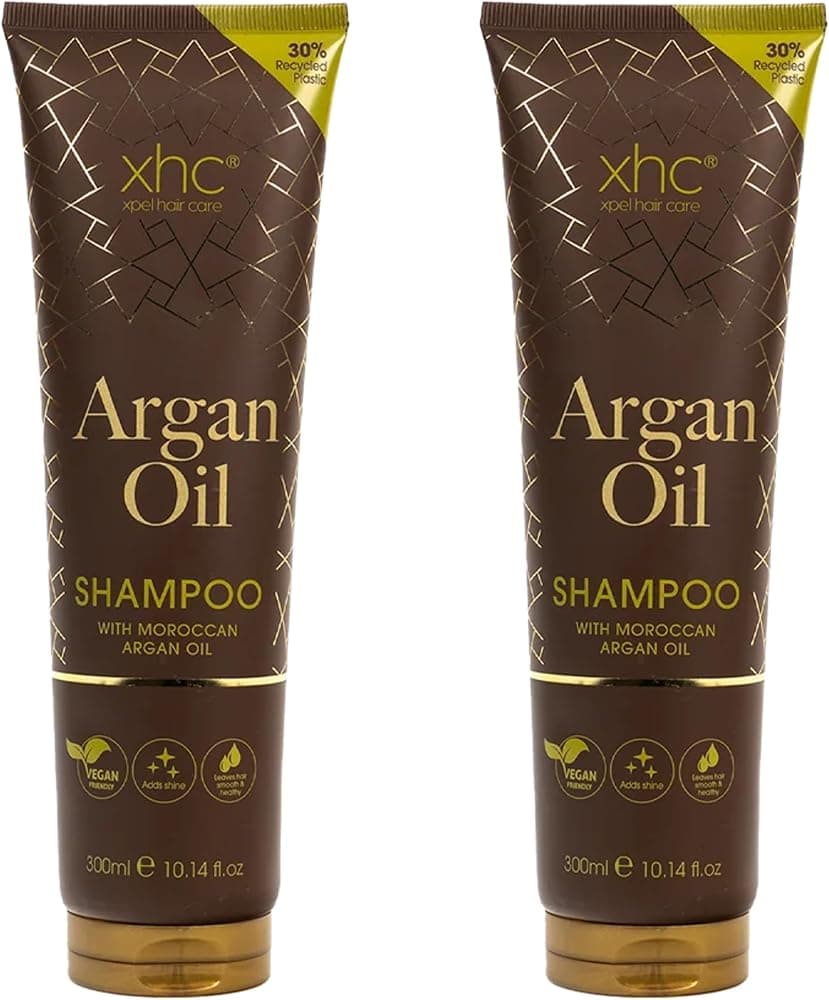
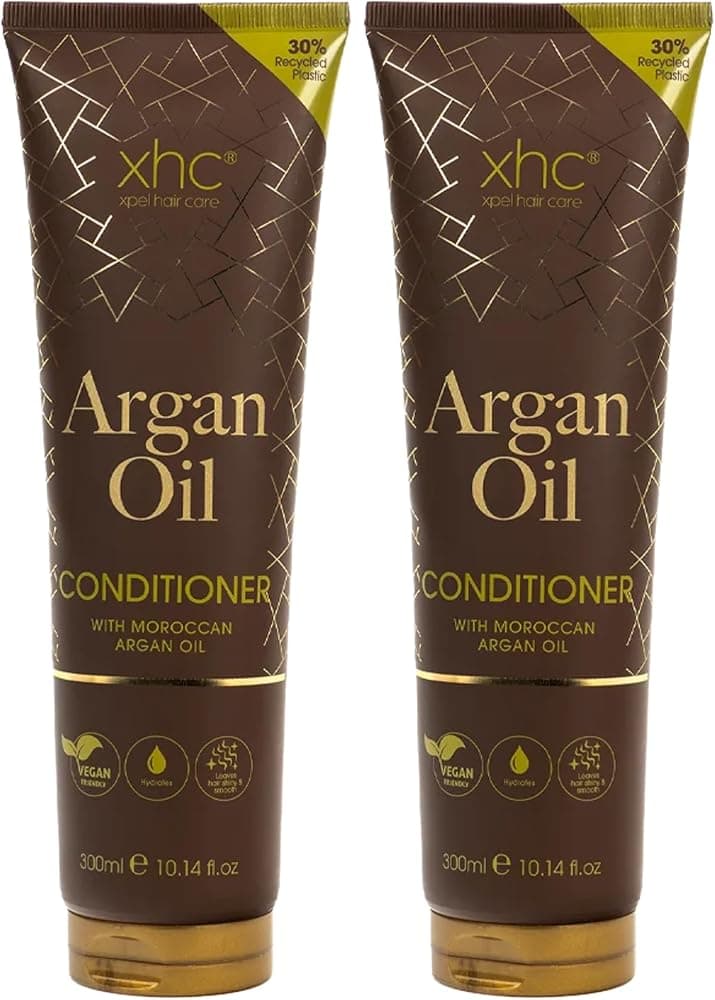
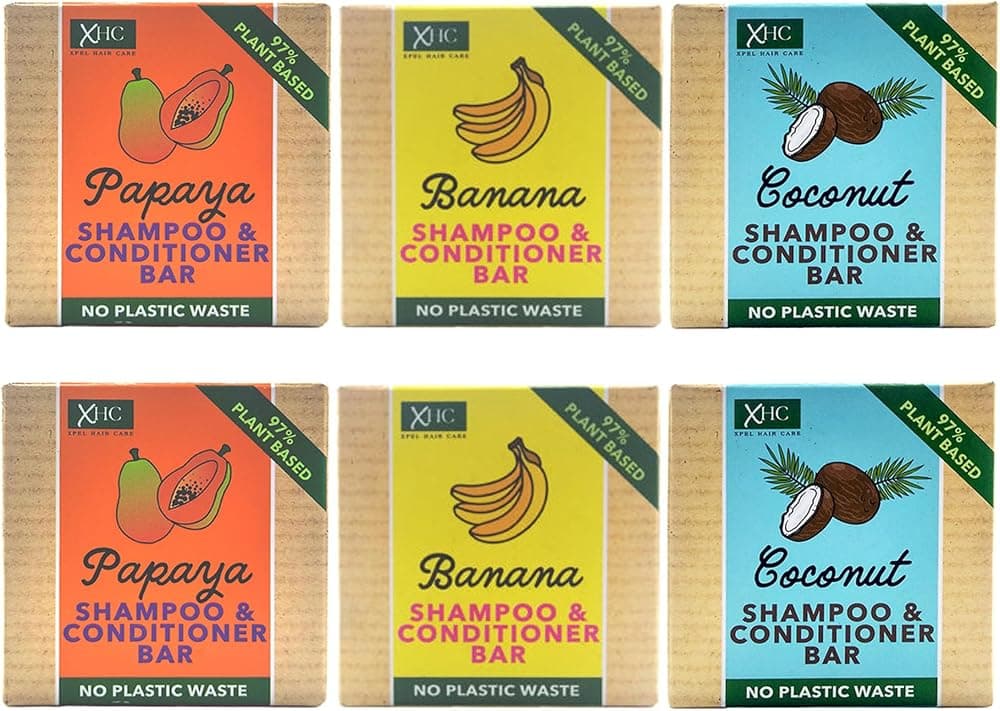
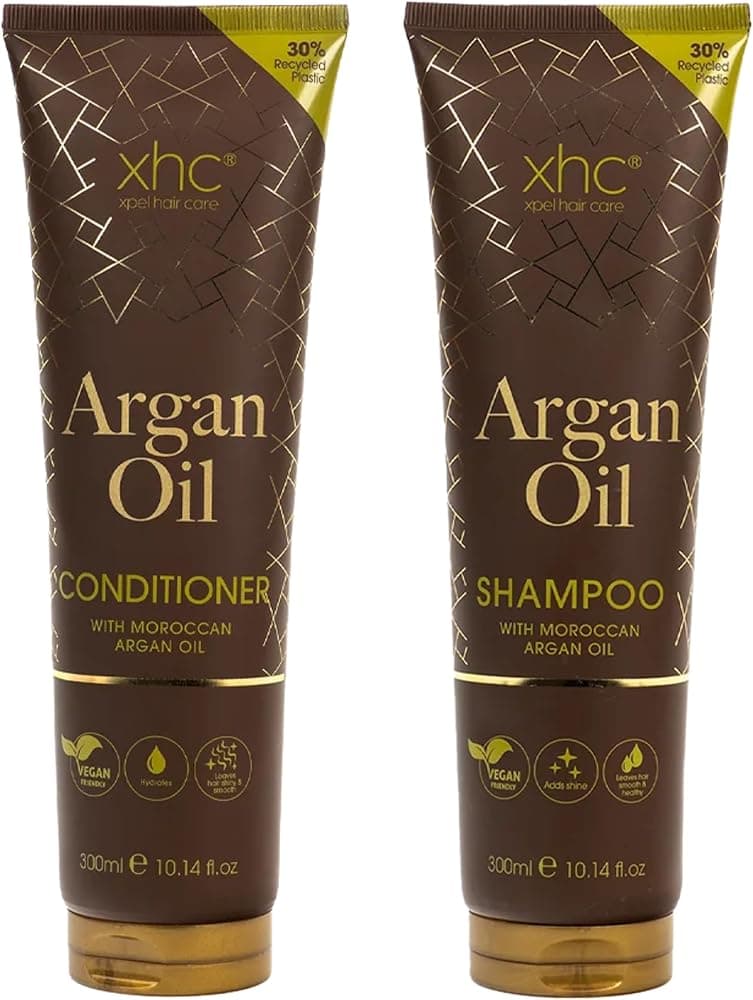
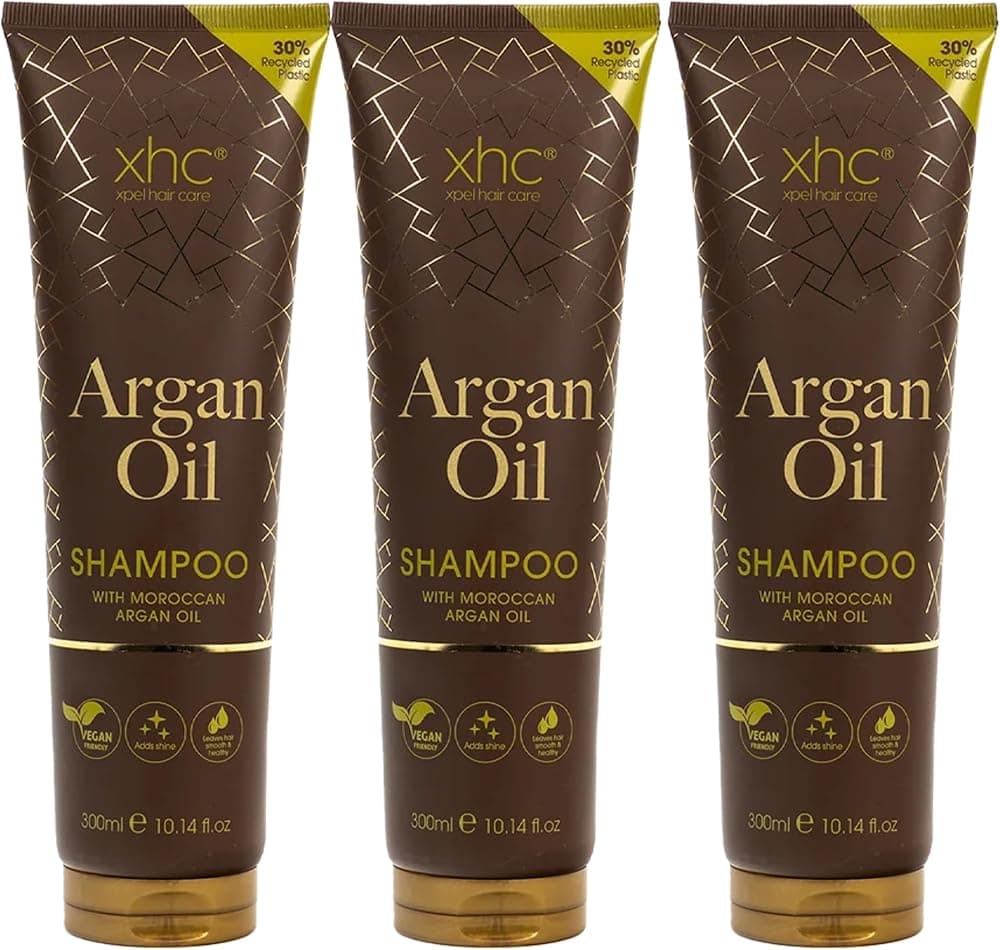
XHC Argan Oil shampoo and conditioner come in 300ml bottles made with Moroccan argan oil, described as nourishing, moisturising, vegan friendly and paraben-free. If you're trying the range for the first time, the shampoo and conditioner set gives you both bottles together. Curly and afro hair routines tend to use conditioner faster than shampoo, since it's applied more generously and more often, so once you know it suits your hair, the 3 pack of argan oil shampoo is worth considering, as bigger bundles cost less per bottle. You can compare every option, including twin packs and the 6 bottle stock-up, on the haircare collection page.
If you've got a question about an order or a bundle before you buy, you can always get in touch and ask.
Frequently asked questions
How much argan oil conditioner should I use?
There's no fixed amount, since it depends on hair length and thickness. As a starting point, use enough to coat each section fully without it dripping, and add more to the ends rather than the roots. If curls feel weighed down afterwards, try slightly less next time, or rinse a little more thoroughly.
Can I leave argan oil conditioner in without rinsing?
Standard argan oil conditioner is designed to be rinsed out. If you want a product left in your hair for ongoing moisture through the day, that's a separate category called leave-in conditioner, which is applied after rinsing out your regular conditioner. What is leave-in conditioner? explains the difference.
Will argan oil conditioner stop my curls going frizzy by day two?
It can help, because it leaves hair smoother and better moisturised, which reduces the roughness that causes frizz. It won't guarantee curls stay perfectly defined for days, since humidity, friction from pillows and how you sleep all play a part. A silk or satin pillowcase and loosely tying hair up overnight often make more difference day to day than product alone.
Is argan oil conditioner suitable for colour-treated or damaged hair?
A nourishing, moisturising conditioner is generally a gentle choice for hair that's already dry or damaged from colouring or heat styling. If hair is severely damaged, breaking heavily or your scalp is irritated, it's worth speaking to a hairdresser or a pharmacist rather than relying on product choice alone.
How do I know if I'm using too much shampoo before I condition?
If hair feels squeaky clean straight after rinsing shampoo, that's often a sign of using more than you need, which can leave hair over-stripped before conditioner even goes on. How much shampoo should you use? has a practical answer for different hair lengths.